Friday, December 21, 2018

The Romanovs

The Romanovs: 1613-1918The Romanovs: 1613-1918 by Simon Sebag Montefiore
My rating: 4 of 5 stars

Since I knew only the most titillating bits of the Romanovs (Rasputin, the execution of the family), this was highly educational. Who knew that their reign began clear back in 1613, included Peter the Great and Catherine the Great? I didn’t. This book, while long, still spans 300+ years. Montefiore does this brilliantly. While there were some sentences in every chapter I couldn’t make sense of, he does a very respectable job in helping the reader follow a myriad of cousins, servants, lovers. He has multiple lists of characters at the beginning of each chapter and family lines at the beginning of each “act”, but I do wish he also included more maps. He does a good job following all the politics but focuses on some of the more scandalous and eccentric stories and anecdotes, but isn’t that what we all really want to know about anyway? Nice epilogue that shows how the Romanovs legacy still affects politics today. Also tons of pictures in the back.


View all my reviews

His brother Mikhail wittily expressed his “astonishment that a
               man of such excessive stupidity could still lose his mind.”
Alexander understood that “The most dangerous moment for a bad government is when
            it begins to reform,” as Alexis de Tocqueville had recently put it
Newspapers mushroomed. “I’ve never
            been greatly enamoured of writers in general,” Alexander confided to Bariatinsky,
            “and I’ve sadly concluded that they are a class of individuals with hidden motives
            and dangerous biases.”
The literary salons
            of Moscow became the battlefield of a debate on the nature of Russia itself between
            so-called “Westerners” and “Slavophiles.”
First, my orders would not be carried out unless they were the
            kind of orders that could be carried out
Rulers are often
            killed not for brutality but for inconsistency. 

The Subway Girls

The Subway GirlsThe Subway Girls by Susie Orman Schnall
My rating: 2 of 5 stars

This was a tempidly interesting book about The Subway Girls, an advertising ploy that was like a mini pageant each month for girls in New York to sell advertising space on the subway in the 1950s. It also follows a professional woman working in advertising today. The point of the book is to show that although some opportunities have opened for women, there are still life choices women have to make concerning work and family. And though women are more often in jobs they weren’t 50 years ago, there is still plenty of biases and prejudices (as well as behaviors) that women still have to fight. It made an interesting jumping off point for book club, but it had immature writing with bad dialogue, questionable motivations, and forgettable plot line.

View all my reviews

What’s interesting to me,” Olivia said, “is that people today talk incessantly about work-life balance and making choices and sacrifices and blah, blah, blah, as if it’s something new that women have to deal with. But listening to all of you, I realize that’s just about being a woman. The times may have changed, but the identity crises we all go through don’t. The societal structures may have a new coat of paint, but they’re still the same impenetrable walls and ceilings underneath that modern gloss. And we’re still expected to do much more than any of us is capable of doing.”

The miniaturist

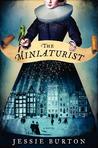
The MiniaturistThe Miniaturist by Jessie Burton
My rating: 3 of 5 stars

This book rates 3 stars because it had an original plot line, interesting characters, and was not badly written. However, it was overly contrived to the point of pushing credulity. All of the plot twists made it impossible to really understand the characters and their motivations. Too many actions weren’t explainable, and though the deluge of secrets kept the plot moving, when it was done, its randomness felt more like a gambit than an organic story.

View all my reviews

Wednesday, December 12, 2018

The True American

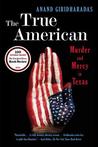
The True American: Murder and Mercy in TexasThe True American: Murder and Mercy in Texas by Anand Giridharadas
My rating: 4 of 5 stars

This is 4 1/2 stars. It is a very well-told story of Mark Stroman who shot a Bengledishi clerk Rais Bhuiyan days after 9/11. It chronicles who these characters are, and what they went through in their lives. Rais in particular has some interesting insights into American culture. A few years after the incident, coincidently as Stroman is about to be executed, Rais seeks to forgive Stroman and stop the execution. It goes on a bit long after the climax, but Gridharadas seems to want to show us how the same cycles are played out here in America, and for some ineffable reason, despite support and even some help, some people never seem to see the same opportunities here that immigrants sometimes find. This book has a lot less to do with racism and 9/11 than you would think; it’s more about paradigms that exist in our culture and why. Unfortunately as nonfiction can tell only facts, there are still some ambiguous plot points, but the change that both men went through is hopeful.

View all my reviews

The Animators

The AnimatorsThe Animators by Kayla Rae Whitaker
My rating: 3 of 5 stars

This book is called The Animators and it’s ultimately all about art. How art can get you through..... Fill in the blank. It literally goes through every scenario, health problems, friendship, past traumas, death, breakups, etc. etc. It can get to be a bit much. Also doesn’t alleviate the thought that you can’t have a personal life and a creative one. Yes, it ends on a hopeful note but it’s a slog to get there.

View all my reviews

The Screaming Staircase

The Screaming Staircase (Lockwood & Co., #1)The Screaming Staircase by Jonathan Stroud
My rating: 5 of 5 stars

Loved, loved this book. Who cares if it’s written for middle schoolers?! The characters are well-developed, likeable, intriguing. The plot was suspenseful and if I could see the ending coming, I chock it up to my age, and it in no way diminishes the fun. For those tweens wondering what to read, this would be my first recommendation! (Ok, after Holes).

View all my reviews

Friday, November 30, 2018

Bring Up the Bodies

Bring Up the BodiesBring Up the Bodies by Hilary Mantel
My rating: 4 of 5 stars

This novel ties up the saga of Henry and Anne well with Thomas lurking about doing the lawyerly thing—in the name of the King!— but really exacting revenge for seemingly petty crimes performed years ago. Brilliant! Again, not sure how historicall accurate it all is but it makes a supremely satisfying read. This novel was not quite as nuanced as the first, so it read a bit quicker, (and was much shorter). All the hubbub about the pronoun “he” in the first book was addressed in the second, but since I had figured out her system of using “he” for Cromwell unless otherwise specified, I was actually irritated with continual clarification in this book! Still, a must read to continue the saga. Better historical fiction than most.


View all my reviews

All our labours, our sophistry, all our learning both acquired or pretended; the stratagems of state, the lawyers’ decrees, the churchmen’s curses, and the grave resolutions of judges, sacred and secular: all and each can be defeated by a woman’s body, can they not? God should have made their bellies transparent, and saved us the hope and fear. But perhaps what grows in there has to grow in the dark.’

He once thought it himself, that he might die of grief: for his wife, his daughters, his sisters, his father and master the cardinal. But the pulse, obdurate, keeps its rhythm. You think you cannot keep breathing, but your ribcage has other ideas, rising and falling, emitting sighs. You must thrive in spite of yourself; and so that you may do it, God takes out your heart of flesh, and gives you a heart of stone.

Wolf Hall

Wolf HallWolf Hall by Hilary Mantel
My rating: 5 of 5 stars

Great historical novel about Thomas Cromwell, Henry VIII, and the creation of the Church of England from the Catholic Church as a for Henry to divorce Catherine and marry Anne Boleyn. Mantel does a good job of recounting the history with plenty of humanity, so you feel immersed in that world. It’s always hard to tell how much the author embellishes the truth for me since I am not much of a history buff, but Mantel does a good job of explaining the motivations and machinations in a believable way. So interesting to see how the split in the Catholic Church helped pave the way for the Bible to be available to the common man. Also interesting to see how little power women had and yet so much depended on a woman to produce an heir, and how a woman could use that dependency to her advantage. Women used what means they had to have a voice. Loved it. (The adaptation on tv is slow and whoever plays Cromwell doesn’t portray the humor and cleverness I found in the book)

View all my reviews

Her Body and Other Parties

Her Body and Other PartiesHer Body and Other Parties by Carmen Maria Machado
My rating: 3 of 5 stars

This was an uneven collection of short stories. “The Husband Stitch” expands and riffs on the story of the woman with the black/green ribbon around her neck. It’s well done and the audience involvement is a genius touch, but it’s chilly tale is ultimately just a retelling. “Especially Heinious” is especially overlong, convoluted and unreadable. “Real Women Have Bodies” is the most original, with a tight storyline that comments on the sacrifices we willingly make as women to fit into society’s mold of fashion and conformity. It is probably the best of the bunch. Several more stories are simply forgettable. “The Resident” is haunting but confusing. And “Difficult at Parties” is simply unreadable. It’s always hard to find a solid collection of short stories but I would simply seek out “Real Women Have Bodies” in an anthology and call it good.

View all my reviews
Babies are heavier than you’d think.

 Her mouth is an endless cavern, into which light and thought and sound descend, never to return.

 Around me was not the absence of sound, but the sound of absence:

My body was so cold it felt like it was disappearing at the edges, like my shoreline wasevaporating. It was the opposite of pleasure, which had pumped blood through me and warmed my body like the mammal I was. But here, I was just skin, then just muscle, and then merely bone. I felt like my spine was pulling up into my skull, each vertebra click-click-clicking like a car slowly ascending a roller coaster’s first hill. And then I was just a hovering brain, and then a consciousness, floating and fragile as a bubble. And then I was nothing.

The receding bubbles leave strange white striations on my skin, like the tide-scarred sand at the beach’s edge.

Tuesday, October 9, 2018

Dark Matter

Dark MatterDark Matter by Blake Crouch
My rating: 4 of 5 stars

A book about alternate realities...my favorite! Totally different spin on the idea of seeing where your life would go if you had made a different choice. Sweet love story...crazy plot twists...good enough ending. My main gripe is the one sentence paragraphs. Like a book written in serial on Twitter. Made it a fast read, I guess.

View all my reviews

The North Water

The North WaterThe North Water by Ian McGuire
My rating: 4 of 5 stars

This book kept reminding me of The Terror by Dan Simmons. It has the same tone and both are about sea expeditions gone awry in the ice. Simmons was the better writer, but McGuire does a passable job. It’s also MUCH shorter and therefore much tighter. There is enough tension in the story to keep you turning the pages, and the ending is gratifying. Themes of redemption, fate, God, and morality against a backdrop of the crudeness and harshness of life on a whaling ship.

View all my reviews

The world we see with our eyes is not the whole truth. Dreams and visions are just as real as matter. What we can imagine or think exists as truly as anything we can touch or smell. Where do our thoughts come from, if not from God?” “They come from our experience,” Sumner says, “from what we’ve heard and seen and read, and what’s been told to us.” Otto shakes his head. “If that were true, then no growth or advancement would be possible. The world would be stagnant and unmoving. We would be doomed to live our lives facing backwards

The Lady of the Rivers

The Lady of the Rivers (The Plantagenet and Tudor Novels, #1)The Lady of the Rivers by Philippa Gregory
My rating: 4 of 5 stars

This is a fine historical novel that follows Lady Rivers through her life. Lots of historical detail mixed in with a little mysticism. Lady Rivers and her husband always seem to be in favor of the “right” thing to do, or have a premonition of how things will work out. When history favors the queen, Lady Rivers and her husband support her, But when history shows that they lose, they seem to be the only people to have tried to talk the parties out of it. I don’t know enough about history to know how much is Gregory’s elaboration, but I didn’t like that only the Rivers’ seemed to see things from a larger view. Surely they were swept along just as much as the other characters? Still, English royalty is forever entertaining and this was no exception.

View all my reviews

Tuesday, September 25, 2018

Landmarks

LandmarksLandmarks by Robert Macfarlane
My rating: 4 of 5 stars

Macfarlane takes on the mission of reintroducing the world to forgotten/rare words that describe the world around us. Or more specifically Great Britain. (From the list of words I’m thinking hedges make up a great deal more of the landscape there than it does here in America.). His main argument is that if we know more vocabulary about the outside world we will appreciate it more. He may be onto something. The other day when it was neither rainy nor misty but somewhere inbetween I thought “hey, it’s mizzling”and enjoyed it that much more. Macfarlane is an amazing writer and an even better reader, pointing out the intricacies of nature writers’ works that would have passed me by. I do admit that the book may have gotten a bit long, even though it’s not a long book to begin with.

View all my reviews

Wednesday, September 19, 2018

Remnant Chronicles

The Beauty of Darkness (The Remnant Chronicles, #3)The Beauty of Darkness by Mary E. Pearson
My rating: 4 of 5 stars

Solid ending to a solid series. Even a “hidden” twist in the epigrams before the chapters (so don’t gloss over those). This was a fun summer read that I read with my daughter. Yes, it has a love triangle. Yes, there are swords, arrows, recoveries in caves, as well as twists you see coming. But there are twists you don’t see coming, and a nice character arch for all 3 of the main characters as they try to determine what loyalty, duty, love and trust looks like. Destinies are fulfilled in surprising ways and the ending is satisfactory. Definitely a YA series I could recommend to young women and one that was fun to read with my own YA.

View all my reviews

Wednesday, August 29, 2018

Where The Bird Sings Best

Where the Bird Sings BestWhere the Bird Sings Best by Alejandro Jodorowsky
My rating: 2 of 5 stars

This was an magical realism retelling of the history of the authors geneology. I am a sucker for magical realism and I thought it was an interesting way to recall your history. So much of the stories that get passed down are fraught with a tinge of myth anyway, and this just goes over the top. Who will ever forget two lovers preserved in honey or a ghost that gets passed down through the generations? Still Jodorowsky comes from some disturbing lineages and there were times I almost stopped reading (and probably should have) because of some of the cruder passages. The ending also felt sort of anti climatic to me, like it was rushed at the end. Some of the imagery and stories were so magical I wish the whole thing could have been more readable.


View all my reviews


In memory, everything can become miraculous. All you have to do is wish it, and freezing winter turns into spring, miserable rooms fill up with golden tapestries, murderers turn good, and children who cry out from loneliness receive compassionate teachers who are really the children themselves, sent back from adulthood to their early years. Yes, my daughter, the past is not fixed and unalterable. With faith and will we can change it, not erasing its darkness but adding light to make it more and more beautiful, the way a diamond is cut.


For a month now, you’ve been lying here pretending to be dead. You don’t rot because you are alive but overcome by indifference.


If a wise man is one who knows that he doesn’t know, then at this moment I’m a wise man.


A silver coin, half a shekel, half a kopek, the same symbol, rich and poor giving a half, the mortal half, while receiving the sum of eternal life.


God hides so we will search for Him. By learning to see Him in everything, we are born.


There is a precise instant when the world is marvelous: now.”


my work, which was to lead all beings to Awareness, progressively eliminating God by absorbing Him in existence so that we would all become an exclusively human Universe. All of that was achieved with the consent of the Father, who, out of absolute love, creates us to be his tomb. From the putrefaction of the divine, our eternity will be born.


“A man sees a frog. The frog says to him, ‘Kiss me, please.’ “The man thinks, ‘A frog that speaks must be an enchanted princess. I’ll kiss her, she’ll turn back into what she was, she will marry me, and I’ll be a millionaire.’ The man kisses the frog, feels an explosion, and finds he’s been turned into a frog. “The first frog says, ‘How wonderful. You were enchanted for ever so long, and, finally, I was able to save you!’”


around an illusion, may elect him president. “But the capitalist regime, aside from some superficial reforms, will go on exactly as it is. It will go right on selling the country, and hunger will only be pacified with bullets. There is a third candidate that few see, who has no possibility of being elected because he preaches outside the circus, that is, from jail. He’s proposing an impossible truth, this Luis Emilio Recabarren. Instead of asking for small victories, like a monkey in the zoo who demands to be well treated by his keepers—a few extra nuts—but doesn’t consider destroying the cage, Recabarren wants everything; he wants to abolish borders, 


Why don’t they show a luminous, triumphant Christ in churches? It would be a bad example to the workers. If I, instead of lugging around these hundred pounds, were shooting light all over the place, I wouldn’t get money, food, and sex—rather, I’d get whippings and a sore backside for being a political agitator.”


As it is, no feline will dare come close. So I understand that sometimes it isn’t good to seek security, because it leads to death. Sometimes it’s better to live in uncertainty. But you know these things because you’re a saint. What work it has cost you to purify you soul. I saw it on your body. You’ve been beaten, had ribs broken. You’ve had to fight against many wills. You feel your parents didn’t love you as they should. All that weighs more than the Christ on His cross. If you like, I’ll lighten you. Memory is like a corset. Your memories stick to your chest, your back, all over your skin, and they form an invisible shell that separates you from the world.”


Each apple is different, because during their growth each receives the sun in a different way.


What She Knew

What She Knew (Jim Clemo #1)What She Knew by Gilly Macmillan
My rating: 3 of 5 stars

This was a fine thriller about a kidnapped boy and the race to find him. Plenty of surprises and red herrings while still inching closer to a somewhat plausible ending. I liked that the title itself plays into the psyche of the reader and changes meaning as the story progresses. It’s not the most tightly plotted, thrilling, or shocking suspense novel I’ve read but it’ll do for a summer read.

View all my reviews

Monday, August 27, 2018

Howards End

Howards EndHowards End by E.M. Forster
My rating: 5 of 5 stars

A classic so a slow simmering start. But l loved the sibling relationships. So many interesting thoughts about place, progress, class, marriage, gender equality, art. I ended up loving it.

View all my reviews

WE are not concerned with the very poor. They are unthinkable and only to be approached by the statistician or the poet. This story deals with gentlefolk, or with those who are obliged to pretend that they are gentlefolk.

But in his day the angel of Democracy had arisen, enshadowing the classes with leathern wings, and proclaiming, "All men are equal—all men, that is to say, who possess umbrellas," and so he was obliged to assert gentility, lest he slip into the abyss where nothing counts, and the statements of Democracy are inaudible


any emotion, any interest once vividly aroused, can wholly die.


those who prepare for all the emergencies of life beforehand may equip themselves at the expense of joy.


The poor cannot always reach those whom they want to love, and they can hardly ever escape from those whom they love no longer.


When physical passion is involved, there is a definite name for such behaviour—flirting—and if carried far enough it is punishable by law. But no law—not public opinion even—punishes those who coquette with friendship, though the dull ache that they inflict, the sense of misdirected effort and exhaustion, may be as intolerable.


The air was white, and when they alighted it tasted like cold pennies. 


All his affection and half his attention—it was what he granted her throughout their happy married life.


yet at the time it bored me more than I can say. And besides—you can believe me or not as you choose—I was very hungry. That dinner at Wimbledon—I meant it to last me all night like other dinners. I never thought that walking would make such a difference. Why, when you're walking you want, as it were, a breakfast and luncheon and tea during the night as well, and I'd nothing but a packet of Woodbines. Lord, I did feel bad! Looking back, it wasn't what you may call enjoyment. It was more a case of sticking to it. I did stick. I—I was determined. Oh, hang it all! what's the good—I mean, the good of living in a room for ever? There one goes on day after day, same old game, same up and down to town, until you forget there is any other game. You ought to see once in a way what's going on outside, if it's only nothing particular after all."


Was that "something" walking in the dark among the suburban hills?


Is it worth while attempting the past when there is this continual flux even in the hearts of men?


historians of the future will note how the middle classes accreted possessions without taking root in the earth, and may find in this the secret of their imaginative poverty.


Her only ally was the power of Home.


Now she understood why some women prefer influence to rights.


But we have to die, we have to leave life presently. Injustice and greed would be the real thing if we lived for ever. As it is, we must hold to other things, because Death is coming. I love Death—not morbidly, but because He explains. He shows me the emptiness of Money. Death and Money are the eternal foes. Not Death and Life. Never mind what lies behind Death, Mr. Bast, but be sure that the poet and the musician and the tramp will be happier in it than the man who has never learnt to say, 'I am I.'"


He prepares the way for cosmopolitanism, and though his ambitions may be fulfilled, the earth that he inherits will be grey.


Differences, eternal differences, planted by God in a single family, so that there may always be colour; sorrow perhaps, but colour in the daily grey.

Theft by Finding

Theft by Finding: Diaries 1977-2002Theft by Finding: Diaries 1977-2002 by David Sedaris
My rating: 1 of 5 stars

DNF. While using a diary to flesh out a biography, or mining your own for story or essay ideas is perfectly legit, the idea of publishing your own for public consumption seems a little full of yourself. This is my first Sedaris book and obviously not the best intro. While I admire his ability to find a snarky observation in daily life, I found him very unlikeable. He’s in his late 20s blowing any good money he makes on drugs and alcohol. He observes people being abused, humiliated, or hopeless and seems to only use their pain for his amusement...no empathy or desire to make things better, just wry observation. I thought maybe it would chronicle his change and rise to the “great” essayist he is revered to be, but halfway through I was only more and more ambivalent and wondered why I was wasting my time with his uninspiring minutiae, so I quit.

View all my reviews

Tuesday, July 17, 2018

The Narrow Road to the Deep North

The Narrow Road to the Deep NorthThe Narrow Road to the Deep North by Richard Flanagan
My rating: 4 of 5 stars

4.5*. This was a beautifully written book about Love and War and Life and Death. It did seem as though it were two books. The first, a love story between Dorrigo Evans, an Australian soldier, and his uncles wife, and the other about his time as a POW under the Japanese building the Burma railroad. In the camp, Dorrigo is a surgeon, and the action shifts from him to Darky, a fellow prisoner, and the guards and Japanese officers at the camp. Flanagan often focuses on the opposition that lies within the same moment...how the jungle can be both beautiful and hell, how someone can be terrified and brave in the same moment. So maybe the two stories are meant to show the best and worst in life, but it was difficult for me to tie the two stories together. Still, both stories are expertly told, with poetic grace and at times horrific realism. I felt the rain and mud slosh around me as I read. Another interesting theme was how what we choose to remember and tell ourselves about our past affects our future.

View all my reviews

Why at the beginning of things is there always light?

 A happy man has no past, while an unhappy man has nothing else.

It is not that you know nothing about war, young man, Dorrigo Evans had said. It is that you have learnt one thing. And war is many things.

 As if rather than him leading them by example they were leading him through adulation

 He took a book from a shelf, and as he brought it up to his chest it passed from shadow into one of the sun shafts. He held the book there, looking at that book, that light, that dust. It was as though there were two worlds. This world, and a hidden world that it took the momentary shafts of late-afternoon light to reveal as the real world—of flying particles wildly spinning, shimmering, randomly bouncing into each other and heading off into entirely new directions. Standing there in that late-afternoon light, it was impossible to believe any step would not be for the better. He never thought to where or what, he never thought why, he never wondered what might happen if, instead of progressing, he collided like one of the dust motes in the sunlight.

 As though what she really sought from him was this obliteration, an oblivion, and their passion could only lead to her erasure from the world. For if the living let go of the dead, their own life ceases to matter.

It’s only our faith in illusions that makes life possible, Squizzy, he had explained, in as close to an explanation of himself as he ever offered. It’s believing in reality that does us in every time.

 Perhaps that was what hell was, Dorrigo concluded, an eternal repetition of the same failure.

Deep Down Dark

Deep Down Dark: The Untold Stories of 33 Men Buried in a Chilean Mine, and the Miracle That Set Them FreeDeep Down Dark: The Untold Stories of 33 Men Buried in a Chilean Mine, and the Miracle That Set Them Free by Héctor Tobar
My rating: 5 of 5 stars

Inspirational, interesting, entertaining, thought-provoking. An excellent retelling of the 33 miners stuck in a Chilean mine. Thoroughly enjoyed it.

View all my reviews

There are many superstitions about women and mines that are expressions of the male-dominated culture’s ambivalence about both women and underground labor. One legend has it that the mountain itself is a woman, and in a sense “you’re violating her every time you step inside her,” which explains why the mountain often tries to kill the men who’ve carved passageways from her stone body.

The quasi-scientific explanation is that the mountain’s deposits of magnetite are attracting and repelling grains of sand that vibrate in the wind.

Are you going to tell me that if we threw you down here for weeks and left you all alone, completely alone, and then we came to rescue you, we’d find you as fine and dandy as you are now? Did you pull that off all by yourself? No, compadre. You made it this far because behind you there were thirty-two others.”

 taken thirty-three days of drilling to reach the thirty-three men.

Thursday, June 28, 2018

Ten Women

Ten WomenTen Women by Marcela Serrano
My rating: 4 of 5 stars

4.5 *. As a rule, I don’t enjoy books that are composed of characters, each chapter a different character with a different story that barely intersects with the other characters but a hotel, or a class, or something connects them all together...the “main” character being the owner of said hotel, class, etc. I always feel as though I’m invited to a novel and get inter-connected short stories instead. Not that I’m opposed to that, I just like to get what I’m sold. Ok that rant aside, that format actually works here. 10 women in therapy with Natasha come and share their stories with each other. Each story is unique to the character, yet universal observations and feelings are shared. I felt I learned a lot about the Chilean culture and history, yet again the situations were also relateable. More than any other book I felt like it spoke what it was like to be female, our strength, our compassion, our vulnerability, and our sacrifice. The beginning and the end made it feel more of a scmaltzy chick lit (the therapist previewing and summing up things) but the stories themselves were powerful. The translation was ok although awkward at times and I wished I knew enough Spanish to read it in its written language.

View all my reviews

Wednesday, June 20, 2018

The Circle

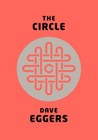
The CircleThe Circle by Dave Eggers
My rating: 3 of 5 stars

This book is equal parts genius and frustration.

Genius- the services described in here that seem like a good ideas, like health plotting, tiny cameras, but Eggers adds just enough extra to make it uncomfortable (being tricked into swallowing a tracker, putting cameras where no one would know, etc.)
— he captures the social pressures to be on social media (“it’s not mandatory, but why wouldn’t you want to share”.)
—helps us think about the fine line between transparency and no privacy...is full disclosure what
we want/ need?
—does a good job of how showing how addicting online affirmations (and how debilitating online jeers) can be

Frustration— Eggers is arguably a genius (staggeringly so), but his novel was all over the place.
Bits and pieces of Mae’s life are incorporated only to fall off. Like kayaking. Did she really never go kayaking again? Her family falls off the map when they turn off the cameras...did she really not try to find them?
Also Mae goes from being humiliated by having a potential boyfriend over-sharing and then becoming a walking camera with full transparency...that leap doesn’t feel authentic to the reader. Neither do several of her other choices once she goes transparent...(finding Mercer, going back to Francis, etc.). There just isn’t enough to help the reader understand how Mae goes from casual user to full circle groupie.
The love interests make no sense and detract from the plot. Even the reveal at the end falls flat. The fact that Mae is so giddy about them at first seems juvenile and doesn’t help us like her (if we’re supposed to.)

Bottom line: read this book if you want a heads up into how a company could potentially supplant government. But don’t expect a well-thought out plot or characters.

View all my reviews

Twenty thousand Leagues Under the Sea

Twenty Thousand Leagues Under the Sea (Extraordinary Voyages, #6)Twenty Thousand Leagues Under the Sea by Jules Verne
My rating: 4 of 5 stars

Jules Verne was a good storyteller. His characters are stock, and his scientific facts questionable and sometimes distracting but you can’t help but get swep up in the great wonders and experiences of the Nautalus. I wish Captain Nemo’s motivations were revealed, and the last adventure seemed like a disappointing cop out. But it still made me want to take a plunge into the ocean, or at least go visit the local aquarium.

View all my reviews

All the Light We Cannot See

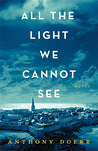
All the Light We Cannot SeeAll the Light We Cannot See by Anthony Doerr
My rating: 5 of 5 stars

Beautiful book about a blind girl, an engineering prodigy, and an agoraphobic veteran. They are from different backgrounds, and even different sides of the war, but their lives intersect so that they all become saviors of each other, each gives hope to the other in impossible situations. It’s a WWII novel, so you can’t entirely escape the tropes that accompany such stories...needless killing and brutality, hardships and secret spy circles. But under Doerr’s artful pen, these incidents seems less cliche than they otherwise might have been and move the story forward. Overall, one of the best books I’ve read recently.

View all my reviews

The Light of the World

The Light of the WorldThe Light of the World by Elizabeth Alexander
My rating: 4 of 5 stars

I don’t as a rule like to critique memoirs, especially ones about people working out emotional pain, as Alexander does here. Her husband has suddenly died and this memoir is about the love they shared, and how she processes his death and moves on. It is beautifully written, and the chapters slide temporally around as she remembers their life and deals with her grief. There is deep admiration, clearly love, profound sadness, doubt, inertia, courage, and hope. It is very touching. But there is no anger, little regret, and absolutely nothing other than love and admiration for her husband. Maybe it would be tactless to talk ill of the dead. Or maybe in her grief all that irritated her once was washed away. But without his flaws, it was hard to see him as a real person. And did she never at one point get mad at him for running when he didn’t feel well? I know I would have. I would have said “why did you have to be so damn perfect and go running every day? Why couldn’t you have just given up and watched tv like a normal person if you didn’t feel well?” But maybe she is better than I. Anyway, it is a beautiful book about amazing people. But without any ugliness it felt less relateable.

View all my reviews

Saturday, May 26, 2018

Pax

PaxPax by Sara Pennypacker
My rating: 3 of 5 stars

I wanted to like this book more than I did. It’s a quiet book about the love of a boy and his fox. It’s also a moral lesson on the horrors and selfishness of war. Pax translates into peace and Pennypacker ruminates about the different meanings of peace...an absconded of war, feeling at home by being at the right place at the right time for the right reasons, and not letting your emotions get the best of you. Chapters flip flop from the point of view of the fox, who has been abandoned in the wild, and the point of view of the boy who left him because he has to live with his grandfather while his dad fights in an unnamed war. The boy realizes his mistake and decides to reclaim him, though the trip doesn’t go as planned, and both he and the fox must learn important Life Lessons along the way. It has some good messages. Unfortunately I can’t think of a youth that would make it through the book. It is slow; there are too many unresolved questions; there are confusing sentences and allusions that only make sense a couple of chapters later; the adults in his life are more broken than he is. Good premise, poor execution.


View all my reviews

Standard Deviation

Standard DeviationStandard Deviation by Katherine Heiny
My rating: 4 of 5 stars

I thought this was a hilarious book and loved it because it never went crude or too eccentric. I felt like I had met all the people in here at some point, and so enjoyed it all the more. Graham is an introvert and his wife is super extroverted, to the point that she regularly is inviting almost-strangers to live with them. And although Graham is regularly annoyed and embarrassed by her, he is also smitten by her on a regular basis. Their son has Aspergers and their attempt to help facilitate his interests and nurture any and all friendships were familiar. The fact that their son has registered a standard deviation away from normal is the crux of the novel. What is normal? Who doesn’t have little quirks and habits that are both annoying and endearing? Those quirks help us connect with the world, Heiny seems to say. Enjoyable, breezy read.


View all my reviews

Monday, May 21, 2018

Quiet

Quiet: The Power of Introverts in a World That Can't Stop TalkingQuiet: The Power of Introverts in a World That Can't Stop Talking by Susan Cain
My rating: 4 of 5 stars

So now I go around asking everyone if they are an introvert or an extrovert. This was a compelling look into how and why introverts think the way they do and gives good arguments about how (forgotten) qualities of introverts are just as beneficial as those of extroverts. She gives good advice on how to get along with an introvert partner or parent an introverted child. (Weirdly, it did not cover introverts raising extroverts, which can still be a challenge). This book answered a lot of my questions and gave some credence to thoughts I’ve always theorized about. In the end, it’s a book about appreciating our differences and valuing each other.


View all my reviews

We like to think that we value individuality, but all too often we admire one type of individual— different kinds of introverts and extroverts. Introversion and extroversion interact with our other personality traits and personal histories, producing wildly different kinds of people.

The number of Americans who considered themselves shy increased from 40 percent in the 1970s to 50 percent in the 1990s, probably because we measured ourselves against ever higher standards of fearless self-presentation.

Extroverts tend to experience more pleasure and excitement than introverts do—

 Extroverts’ dopamine pathways appear to be more active than those of introverts Introverts, in contrast, are constitutionally programmed to downplay reward—to kill their buzz, you might say—and scan for problems. “As soon they get excited,” says Newman, “they’ll put the brakes on and think about peripheral issues that may be more important. Introverts seem to be specifically wired or trained so when they catch themselves getting excited and focused on a goal, their vigilance increases.”

Morning Star

Morning Star (Red Rising, #3)Morning Star by Pierce Brown
My rating: 4 of 5 stars

This was a really good series. I did not see all the twists and turns coming. I also appreciated that some of the negative aspects of revolution were emphasized (even if they were never resolved) like refugees and the question of what to do with prisoners of war. Darrow has been through a lot in these books, but he has grown as a leader and realizes building is part of the revolutionary process. Like always Brown does not downplay the horrors of war, and though some might find it uncomfortable reading, I appreciate that he doesn’t glorify it (much). At well over 500 pages I did find that some of it dragged. (We don’t need 10 pages of goodbyes every single time the friends part to wage battle in different parts of the galaxy.). But the ending was delightfully twisty and wonderfully hopeful.


View all my reviews

Thursday, May 10, 2018

The Comstant Gardner

The Constant GardenerThe Constant Gardener by John le Carré
My rating: 3 of 5 stars

It almost pains me to give le Carre less than 4 stars, but this just wasn’t my favorite book. The reason may be found in the afterword he wrote where he is careful to explain that the story was not based on any particular experiences of his. Maybe there is more truth to his other spy books, which make them so riveting. And those stories without twisting plotlines usually have deep characters. This one seemed to be built around the issue of pharmaceuticals instead of plot or character and it felt a bit lackluster. There was no real mystery, and I didn’t feel tied to any of the characters. It may have been a statement about the reach of capitalism and its consequences, but it’s a story that’s been told before and so it was neither shocking nor fulfilling. Sorry le Carre, but this one wasn’t a keeper.


View all my reviews

Wednesday, May 9, 2018

The Nix

The NixThe Nix by Nathan Hill
My rating: 3 of 5 stars

An interesting read about family, choices, and the interconnectedness of life. Still, as with most long novels, I found this could have been edited down a bit. Each character, (and there are several) discovers the truth of the nix...that the things you love will be your undoing. There’s even a bit, superfluous as it is, about a tangential character who is addicted to video games and it almost kills him. Not really necessary to the plot, but I do want to send that chapter to all the kids I know addicted to video games...it really goes into the science of how it rewires your brain. The fact that this is the bulk of my review maybe tells you the gist of the book....slightly interesting, good writing, but overall not compelling.

View all my reviews

 He did not know she had been leaving for many months now—in secret, and in pieces.

 Samuel heard a story about a certain kind of African turtle that swam across the ocean to lay its eggs in South America. Scientists could find no reason for the enormous trip. Why did the turtles do it? The leading theory was that they began doing it eons ago, when South America and Africa were still locked together. Back then, only a river might have separated the continents, and the turtles laid their eggs on the river’s far bank. But then the continents began drifting apart, and the river widened by about an inch per year, which would have been invisible to the turtles. So they kept going to the same spot, the far bank of the river, each generation swimming a tiny bit farther than the last one, and after a hundred million years of this, the river had become an ocean, and yet the turtles never noticed.

And come to think of it, maybe this is the most important lesson the school could teach them about the American workplace: how to sit calmly at your desk and surf the internet and not go insane

. “You take responsibility for your actions by facing the consequences for them.”

 was easy to forget when looking at the chaos of the cereal aisle that all these hundreds of options were actually one option.

This was the price of hope, he realized, this shattering disappointment.

 “Because when all you have is the memory of a thing,” she said, “all you can think about is how the thing is gone.”

What kept people where they were, in their normal orbits? Nothing, he realized for the first time. There was nothing to stop anyone from, on any given day, vanishing.

Anyway, what they discovered is that our memories are tangible, physical things. Like, you can actually see the cell where each memory is stored. The way it works is, first, you have a perfectly pristine, untouched cell. Then that cell is zapped and gets all deformed and mangled. And that mutilation is, itself, the memory. It never really goes away.”

 “Every memory is really a scar.”

Faye sits and waits for the orchestra to begin playing again and thinks about this—harvest—and how it always makes her sad, how the cornfields in November look like battlegrounds, the chopped-down plants blanched and bonelike, cornstalks like femurs half buried and poking sharply out of the ground.

 There’s a certain essential lack of courage among people who seem to be good at everything.

Not heavy, exactly, but given enough time, any weight can become too much to bear.

 Tonight, it was carnal. Tomorrow, carnage.

Sometimes what we avoid most is not pain but mystery.

 What Faye won’t understand and may never understand is that there is not one true self hidden by many false ones. Rather, there is one true self hidden by many other true ones. Her belief that only one of these is true obscures the larger truth, which was ultimately the problem with the blind men and the elephant. It wasn’t that they were blind—it’s that they stopped too quickly, and so never knew there was a larger truth to grasp. And the more she believes she only has one true self, the more she flees to find it. She’s like someone trapped in quicksand whose efforts to escape only make her drown faster.

 That when he looked at her he never really saw her. And she wonders now if all her panic attacks and problems had been elaborate attempts to be paid attention to, to be seen. She’d convinced herself she was haunted by ghosts from the old country because—even though she didn’t understand it in these terms—maybe she was trying to be Freya for him.

 It would be a memory that sustained him his whole life, but it would also be the thing that haunted him.

 “even the things we do to break the routine become routine. Even the things we do to escape the sadness of our lives have themselves become sad. What this ad acknowledges is that you’ve been eating all these snacks and yet you are not happy, and you’ve been watching all these shows and yet you still feel lonely, and you’ve been seeing all this news and yet the world makes no sense, and you’ve been playing all these games and yet the melancholy sinks deeper and deeper into you.

Civilization had this unintended side effect, which is melancholy. Tedium. Routine. Gloom.
Lilac Girls

Lilac GirlsLilac Girls by Martha Hall Kelly
My rating: 4 of 5 stars

Good historical fiction of WWII. It seems like you’ve read everything about a certain time era but there are as many stories to tell as the people having the experiences. This one told of the experimental operations that went on in Ravensbruck concentration camp, as well as the American socialite who championed the girls after they were released. Continuing the story after their release was definitely a new perspective...how do you go back to your “old” life? Kelly also attempted to tell part of the story from Herta, one of the nurses at the camp. Although it was a good and new perspective, I felt like she was the least developed character, and her point of view was abandoned in the later part of the novel. Still, an amazing story.

View all my reviews

Thursday, May 3, 2018

Barkskins

BarkskinsBarkskins by Annie Proulx
My rating: 3 of 5 stars

This is an epic book spanning several generations and locales from Canada to America to South America. But don’t expect to cozy up to any character too long. The real character is the forest and the forestry business. It makes for some interesting facts and is obviously anti-clearcutting. It is also about the erasure of the Native people and their culture. A good history, some eye-opening details, but not enough character connection to make you really care.

View all my reviews

Did You Ever Have a Family?

Did You Ever Have a FamilyDid You Ever Have a Family by Bill Clegg
My rating: 5 of 5 stars

This was like a set of nesting Russian dolls. Each chapter was a different point of view and each added just a bit to the whole story so that in the end you know what happens from all different points of view and why but without being redundant. Although it starts with tragedy it is ultimately hopeful story about family and forgiveness.

View all my reviews

Friday, February 16, 2018

A Girl Named Zippy

A Girl Named ZippyA Girl Named Zippy by Haven Kimmel
My rating: 3 of 5 stars

I listened to this on audiobook and I think it made the book more interesting because it was read by the author and her timing and character voices made it come alive. Otherwise it was a cute, funny memoir. Definitely made me realize that with a little embellishment any life story can be interesting.

View all my reviews

Tuesday, February 13, 2018

The Heart is a Muscle the Size of a Fist

Your Heart Is a Muscle the Size of a FistYour Heart Is a Muscle the Size of a Fist by Sunil Yapa
My rating: 2 of 5 stars

What I liked most about this book is its title. It is the perfect title to this book about conflict borne out of love. Conflict because of a desire for making things better. This book mostly deals with the non-violent protesters at the Seattle WTO meetings in 1999 and the police who dealt with them. It’s as lopsided a portrayal as the news coverage was of it back then, only skewed this time in favor of the protesters. The characters just didn’t seem to be believeable though and so despite the research and good intentions, I had a hard time buying the whole thing. Although Yapa includes some of her resources in the back, I wish she would have given a quick summary of her findings. My quick internet search did not reveal quite the same amount of brutality she documents. And I wanted to know what “facts” which true and which were imagined. Unfortunately, despite the feeling that this should be an Important book, I found it somewhat forgettable—which is why I am only just now blogging about it.
View all my reviews

Thursday, February 8, 2018

An Unnecssary Woman

An Unnecessary WomanAn Unnecessary Woman by Rabih Alameddine
My rating: 3 of 5 stars

This was a hard book to review. I sort of hated it right up until the end. Until then the inner musings of a Beiruti woman, living alone and translating translations of books felt unnecessarily meandering and erudite. She quotes authors and philosophies that I don’t know and haven’t heard of and so had a hard time connecting to. There was just enough “memories” of Beirut and its wars and culture to keep me reading. Then, at the end, you realize how masterfully Alameddine is at his subtlety in his message: it dawns on the reader at the same time it dawns on the main character, Aaliya, that an elderly, divorced, childless woman whose friends have died and whose family is estranged and who translates books no one will read is still remarkably, profoundly necessary all along.

View all my reviews
The cure for loneliness is solitude. —Marianne Moore, from the essay “If I Were Sixteen Today”
Don Quixote’s misfortune is not his imagination, but Sancho Panza. —Franz Kafka, Dearest Father: Stories and Other Writings
if literature is my sandbox, then the real world is my hourglass—an hourglass that drains grain by grain. Literature gives me life, and life kills me. Well, life kills everyone.
We rarely consider that we’re also formed by the decisions we didn’t make, by events that could have happened but didn’t, or by our lack of choices, for that matter.
Remembering is the malignancy that feasts on my now.
We needed an explanation because we couldn’t deal with the fact that it could have been any one of us. Assuming causation—she was killed because she couldn’t hear anything since the radio was too loud—lets us believe that it can’t happen to us because we wouldn’t do such a thing. We are different. They are the other.
As much as I loved it and felt at home within its cages, school is more Hades than Heaven—a ritual killing of childhood is performed in school, children are put to death. The guard was the ferryman.
Henri Matisse once said, “It has bothered me all my life that I do not paint like everybody else.”

Friday, January 19, 2018

Lab Girl

Lab GirlLab Girl by Hope Jahren
My rating: 4 of 5 stars

Sometimes your life story is defined as much by the paths you did not take as the ones you did. I felt a kinship with Jahren simply over her enthusiasm for plants. I was a Biology graduate and I loved my botany classes. Jahren understands my marvel over the miracle of a seed landing in the right soil, with the right sun and water balance to make it grow. A seed can be less than an inch away from a seedling, but lay dormant because the right microclimate doesn’t exist. Jahren writes about all of that and more that makes plants some of the most amazing and tantalizing organisms on earth. And she does it in an interesting and understandable way. Each chapter is alternated between an essay on plants—all gold—and memoirs of her life. Perhaps tellingly, either of me or of Jahren I don’t know, the essays on plants were much more intriguing to me. Still, I enjoyed much of her life as well if only because it made me recall fondly the time I spent out in the field. The relationships formed around the search for knowledge is unique, deep, and can be truly plutonic. There were definitely some tedious parts (how to keep a saline bag sterile); some annoying parts (we get it, scientists are poor); and some weird parts (hair in a tree?) but overall I enjoyed this virtual tour of a path I didn’t take.

View all my reviews

The embryo that became my tree sat on the ground for years, caught between the danger of waiting too long and the danger of leaving the seed too early. Any mistake would surely have led to death, and to being swallowed up by a seething, unforgiving world capable of rotting even the strongest leaf in a matter of days.

the grown-up trees presented a future that was as stultifying as it was interminable. Nothing but fifty, eighty, maybe a hundred years of just trying not to fall down,

The adults grew a bit thicker around the middle each year, with little else to show for the passing decades.

Something so hard can be so easy if you just have a little help. In the right place, under the right conditions, you can finally stretch out into what you’re supposed to be.

Each beginning is the end of a waiting. We are each given exactly one chance to be. Each of us is both impossible and inevitable. Every replete tree was first a seed that waited.

Helpless and impotent against the awesome power of Death, we nonetheless bowed our heads in the pharmacy, injected twenty milliliters of salvation into a bag of tears, blessed it again and again, and then carried it like a baby to the hospice and offered it up.

Humans are actively creating a world where only weeds can live and then feigning shock and outrage upon finding so many.

A CACTUS DOESN’T LIVE in the desert because it likes the desert; it lives there because the desert hasn’t killed it yet.

They further hypothesized that the VOC must have traveled at least a mile and was sensed as a distress signal by the other trees, which then preemptively fortified their leaves with caterpillar poison. Through the 1980s, generation after generation of caterpillars died miserable, starving deaths due to these poisons. By playing this long game, the trees ultimately turned the tide of the war.

Plants do not travel through space as we do: as a rule they do not move from place to place. Instead they travel through time, enduring one event after the other, and in this sense, winter is a particularly long trip.

Multiple light experiments have shown that the changing “photoperiod” is what triggers the tree to harden; it can be triggered in July if we fool the tree using artificial light. Hardening has worked for eons because a tree can trust the sun to tell it when winter is coming, even during years when the weather is capricious. These plants know that when your world is changing rapidly, it is important to have identified the one thing that you can always count upon.
 
What if this moss had moved into an area, deemed it not wet enough, and proceeded to change this high ground into the soggy mess it preferred, causing what was previously heterogeneous to evolve into a uniformly green expanse?

Many of the same things that control our decisions regarding what we do with new resources, it turns out. Our genes limit our possibilities; our environment makes some courses of action wiser than others; some of us are inherently conservative with our earnings; some are prone to gambling; even our fertility status might be considered when evaluating a new plan for investing.

His clock and my own were forever out of sync, a simple fact that had placed an untraversable canyon between us. While it seemed that I experienced everything, he appeared to me to passively do nothing. Perhaps, however, to him I was just buzzing around as a blur and, like the electron within an atom, exhibited too much random motion to register as alive.


God Grew Tired of Us

God Grew Tired of Us: A MemoirGod Grew Tired of Us: A Memoir by John Bul Dau
My rating: 4 of 5 stars

An incredible, inspirational memoir. Dau’s life is incredible—that he survived at all, first of all. That he survived with as much grace, wisdom, and gratitude makes it inspirational.

View all my reviews

The Ocean at the End of the Lane

The Ocean at the End of the LaneThe Ocean at the End of the Lane by Neil Gaiman
My rating: 5 of 5 stars

I’ve read Coraline and The Graveyard Book and I admire the way Gaaiman doesn’t shy away from the horror and confusion that can come with childhood. Death, disappointment, and fear are even more horrifying for the young who don’t understand or have the perspective to cope with it all. Most terrifying of all in Gaiman’s world is the sudden changing of a parent, whose constancy used to be a source of safety. At the same time, Gaiman also doesn’t back down from the magic that hope and love have and that children are more open to. Once again, Gaiman captures childhood with all its horrors and all its hope.

View all my reviews

How to be Victorian

How to Be a VictorianHow to Be a Victorian by Ruth Goodman
My rating: 4 of 5 stars

When I was young, my idea of imaginary play was to pretend I was the characters in the books I was reading and extrapolate what my daily life would look like in their terms. I had no idea how off I was. This book covers a typical Victorian day for both sexes and in multiple financial classes. I found the whole book fascinating and even enjoyed the author’s personal anecdotes. I am now extremely grateful for hot water, modern medicine, and my washing machine!

View all my reviews

Wednesday, January 3, 2018

Funny Girl

Funny GirlFunny Girl by Nick Hornby
My rating: 4 of 5 stars

Not as hilarious as other Hornby books I’ve read but still a fun romp. It takes a jab at those who deem popular (art, books, comedy) as somehow inferior to the highbrow. Hornby, one of the funniest authors I’ve come across, seems to point out that pop culture is not only art (inspired at that) but that it is valuable because it reflects and shapes “real life”. Those characters that were scoffed at for being conventional and sell-outs seemed happier than those who tried to be avant garde. Cute, fun book.

View all my reviews

She understood the need for something better...And she could argue that she had talent, and if she'd let it swell and fester, then it would have killed her.  But she hadn't known for sure it was real, and she hadn't known for sure it would save her. 

She owed her mother everything and nothing, all at the same time.

The Book of Joy

The Book of Joy: Lasting Happiness in a Changing WorldThe Book of Joy: Lasting Happiness in a Changing World by Dalai Lama XIV
My rating: 5 of 5 stars

I didn’t uncover any new mystery to joy in this book; rather, it reminded me of things I already knew but are inclined to forget, like forgetting yourself and focusing on others. From gratitude to humility they really do sum up the principles of joy. Abrams does a good job, too, of including the Dalai Lama’s and Tutu’s life stories. These are good reminders of truths told in a way that people from various belief systems would be open to. (One caveat...no mention of those suffering from clinical depression).

View all my reviews

Summerland

SummerlandSummerland by Michael Chabon
My rating: 3 of 5 stars

Chabon is a favorite author of mine, but while I liked parts of this book quite a lot, I just didn’t love it. The beginning felt a bit too convoluted and contrived. Once the plot is set up, however, and the “rules” to this alternate reality are established, the story takes off. It is wildly imaginative and even somewhat surprising. There is a motley of characters (enough for a baseball team!) and Chabon does a rather skillful job of fleshing these sidekicks out. The lands and people they meet are also strange and wonderful. Everything is so strange and wonderful in fact that it can feel a bit overwhelming. Unfortunately, the ending! Why are endings so hard?! It was confusing, contrived, and unfulfilling. I suggest you read The Amazing Adventures of Kavalier & Clay instead.

View all my reviews

This belief, like all our most fervent beliefs, was largely a matter of will.

Believing in fairies was a kind of discipline, and enforced habit of looking and listening that invested the world around me with rich and strange possibility.  Children, like scientists--and, at our best moments, like writers--know that the deepest mysteries are encountered when we are paying the closest attention.

Fairies, the remnant of a departed grandeur, a fallen race, a regretted creation, help to explain the way the world that has been left to us so often feels hostile to our presence.

Coyote wants everything, but he wants in carelessly, and in no particular order.

No matter how richly furnished you made it, with all the noise and variety of Something, Nothing always found a way in, seeped through the cracks and patches.

Mr. Feld was right; life was like baseball, filled with loss and error, with bad hops and wild pitches, a game in which even champions los almost as often as they won, and even the best hitters were put out seventy percent of the time.