Wednesday, September 2, 2026

Angle of Repose

Angle of ReposeAngle of Repose by Wallace Stegner
My rating: 5 of 5 stars

I first read this in college, before I got married, and right before I dated a cowboy (perhaps not coincidentally). It wasn't quite the novel I remember, the ending climax so shocking to me then it seemed to be the center of the book and I would have told you it was solely about that one incident. It is, as Lyman Ward, the fictitious narrator, put it, a history of a marriage. It is how Susan Ward followed her engineering husband into the "wild" west and tried to keep a hold on who she was and where she came from. It is how a man tries to keep his integrity in a lawless land. It is about the sacrifices they make to keep their family together, and the dreams they have both individually and together. The memorable tragedy of the novel could be laid at the foot of Susan, of her pride and her selfishness and her longing for something more than the life her husband offered her. But Lyman is more compassionate toward her than he is his own wife, and through his eyes we see someone desperately trying to make peace with the life she led rather than the life she dreamed about. ("Is this the life you chose yourself/Or just how it ended up?" The Killers). The fact that Susan and Oliver end up in an "angle of repose", a place of "lying down", a place of acceptance or appeasement, which for them was a "separate line that did not intersect", is perhaps the true tragedy.

I wondered back then why Stegner used Lyman Ward particularly as the narrator/ historian. The intro in my copy says it was a way to embody the idea of time being lived in the past and present simultaneously that occurs when working on historical works. I think, too, having Lyman Ward be as helpless as he was allows him to understand the confinement, dependence, and desperation Susan, as a woman had, especially in that era.

Having read this novel again after being married for 30+ years, I find it even more intricate and nuanced than I did the first time around. Our marriage also included several moves, several dreams that changed, several sacrifices and choices for our family. I am gratified that our angle of repose seems to be rolling closer together, but can relate to some of the feelings and frustrations of Susan and feel the full effects of the tragedy must have been for Susan after having children of my own ((both the loss of one, and the loss of the respect from the other)). Stegner writes these emotions as beautifully as he describes the west--both its beauty and its barrenness. His landscapes are the perfect backdrop for this marriage that struggles to survive in the elements, each not quite comprehending what the other needs.

View all my reviews

I believe in Time, as they did, and in the life chronological rather than in life existential. We live in time and through it, we build our huts in its ruins, or used to , and we cannot afford all these abandonings.

the Doppler Effect. The sound of anything coming at you--a train, say, or the future--has a higher pitch than the sound of the same thing going away.

who wants to compute the speed of history? Like all falling bodies, it constantly accelerates. 

But I would like to hear your life as you heard it, coming at you, instead of hearing it as I do, a sober sound of expectations reduced, desires blunted, hoped deferred or abandoned, chances lost, defeats accepted, griefs borne. 

Exposure followed by sanctuary was somehow part of Grandmother's emotional need, and it turned out to be the pattern of her life.

Don't you know how we lose the sense of your own individuality when there is nothing to reflect it back upon us?

What really interests me is how tow such unlike particles clung together, and under what strains, rolling downhill into their future until they reached the angle of repose where I knew them.  That's where the interest is.  That's where the meaning will be if I find any. 

What made that union of opposites home them?

It was what she had deliberately chosen.

Something must have told her, as they dragged over the summit and down to English George's that character as well as mountains had to strip for the skies.

For that sort of pioneer, the West was not a new country being created, but an old one being reproduced.

Quiet desperation is another name for the human condition.

I only know that passion and guilt happened, in some form.  In their world, their time, their circumstances, and given their respective characters, there could have been no passion without guilt, no kisses without tears, no embrace without despair.

He had to be himself--nothing spectacular, nothing gorgeous or picturesque.  Just, as she had more than once said in her letters to Augusta, her plain boy.  But it was on his sill and judgement that everything hung.  Having doubted him thought the picturesque hour of departure, she no saw him go with a quick, strong rush of love and pride.

Is it not queer, and both desolating and comforting, how, with all associations broken, one forms new ones, as a broken bone thickens in healing.

She mined and irrigated every slightest incident, she wrote and drew her life instead of living it.

"You married me," his look said. "Maybe that was a mistake.  But you didn't marry what you could make out of me.  I wouldn't be much good remodeled."


Monday, August 10, 2026

The Force

The ForceThe Force by Don Winslow
My rating: 2 of 5 stars

A dnf for me at 50%. Malone is a cop. The first few chapters go on and on about the nobility of the calling of cop but then we learn that though he will give turkeys away on Thanksgiving, make sure kids aren't abused, and treats his partners like family--he is just as dirty as any of them. Well, but its just the way of the city. No one cares if how you get the job done as long as you get the job done. But then he gets hauled in, has to name names, and you can see his inextricable slide into more and more rationalizations. I gave it 2 stars because it probably isn't a bad book, just one I got tired of. Too much swearing. Too much melodrama. Probably didn't help that I just read Colson Whitehead's Harlem trilogy recently and he does the self-rationalizing good/bad guy thing so much better.

View all my reviews

After Life


After LifeAfter Life by Gayle Forman
My rating: 3 of 5 stars

Sweet YA novel about death. I know that sounds weird. Amber comes back home to realize she's been dead for seven years and her death definitely affected her family and friends. Some wanted revenge, some gave up faith, some were riddled by guilt, and others gave up on their own lives. Her reappearance also affects everyone differently (disbelief, new-found faith, suspicion). But her sister knows something that everyone doesn't--Amber has always been there, looking out for her. Perhaps people don't die if we let their life, memories, and influence continue. This novel moves fast introducing ideas and feelings, but not mining them too deep (because its YA?) but it allows the reader to come to their own conclusions.

View all my reviews

Not Quite Dead Yet


Not Quite Dead YetNot Quite Dead Yet by Holly Jackson
My rating: 4 of 5 stars

Can it be called a cozy mystery when the victim is investigating their own murder? Jet has been fatally wounded and only has about a week to solve who wanted her dead and why before she has an inevitable aneurysm. There are plenty of suspects and motives and just when you think you've figured it out, you're wrong. There's a sweet romance and the lesson to live life as full as possible because who knows when it's our last week. It all builds to slightly melodramatic over-the-top ending, but hey, that's what cozy mysteries are all about, right?

View all my reviews

Turns out dying feels a lot like living.

Transcription


TranscriptionTranscription by Kate Atkinson
My rating: 3 of 5 stars

I love a good spy romp and this definitely has a lot of tropes in it (alcoholic spy, gay spy, woman who knits). What was interesting about this one is the life of the spy after the war. What happens when you run into an old acquaintance? How do the things you did as a spy affect you now? It may have been the fact that I read this in spurts because of vacation but I felt like the disjointed timelines did more harm than good in this book. Too many people in each time period--too hard to keep track. Timelines that looped within timelines. References to things that happened in the book, and things that hadn't happened yet made me keep wondering if I'd missed something. Some plot points didn't seem to get resolved during all the time jumping.

View all my reviews

He had no Shakespeare, she realized. 

Do not equate nationalism with patriotism...Nationalism is the first step on the road to Fascism

This was how people disappeared from history, wasn't it? They weren't erased, they were explained away.

the counterfeit, although no deception was intended...was in some was truer...

Isola


IsolaIsola by Allegra Goodman
My rating: 5 of 5 stars

I loved this book! It starts out slow, but I feel like it needed to to gain context of her life and the times. Her journey on the island was devastatingly beautiful and I thought it was a beautiful allegory. I was shocked to realize it was based on a real person. Goodman has transcended historical fiction with this one.

View all my reviews

I protested, "You never take my side." "I am always at your side," she said.  "That's different."

We were prisoners of love--but not as poets would describe it.  We had lost hope and equanimity, but not for any passion of our own. 

Even in the dark, my nurse found signs of grace

and I must hurt while was living.

They will say, You are not she.  You are not the Marguerite who lived here once.  And that was true. 

State of Paradise


State of ParadiseState of Paradise by Laura van den Berg
My rating: 4 of 5 stars

This was a great, quirky read--one of the best takes on Covid that I have read. A ghost writer is still living with her mother after a pandemic which leaves unsettling and ambiguous side effects. People are disappearing, there are sinkholes swallowing up great swathes of land, and it is all connected to a virtual reality game. Van de Berg explores how to be present in your life, and the many ways in which we disappear, sell ourselves short, or don't recognize our influence. And she reveals how the world is constantly changing for good or for bad (or for weird), but that that's ok. We'll look back and at this weird new time one day and be nostalgic for it. For all its insight, I do wish it was a bit more cohesive.

View all my reviews

Ghosting is not how I intended to spend my days on earth

The knife was the guillotine; the knife is the universal means of solving all knots; and along the blade of a knife lies the path of paradox--the single most worthy path of the fearless mind.

"Lubber" comes from the Old English word :lobre" lazy--a fitting name for these ambling, flightless pests.

The thing about holes...is that you can't force them to close.

"At first I thought I'd been stabbed by a ghost."

"We've lost you," my father said when he parted the white curtain and saw me in the hospital bed, even though I had, technically speaking, just been found.

The problem, I have decided with people who never leave home is that they are nver forced to become someone else.

People tell stories to will lies into truth.
 People tell stories to bend truth into lies.
People tell stories to carve for themselves a legible shape our of an inexplicable existence.
People tell stories to atone for what they have failed to do in life.

A mistake is never his mistake unless he fails to catch it.

Florida is used to disaster, in other words, but it used to disasters it can name.

It always amazes me when people ask what happened? as though the question is a simple one.

"She told me about the etymology of 'utopia", he says.  "How the word literally translate to 'no place".

There is a suspicious lack of privacy in many of these utopias.

Sometimes we are called back to the things we most want to flee, perhaps because they left such a mark that we don't know how to leave them behind.

A utopia is, after all, a thing that rises from disaster, ruin, rubble.  Without all that failure there can be no such thing as a utopia, since there would be no other reality to compare it to.

When I first became a ghost, the assistants emailed me a tip sheet titled Principles of Plot.  From this sheet, I learned that every action in a story is caused by what precedes it.  Nothing is random, in other words. 

Later I told him that one must be conscious in order to be calm.  That these kinds of distinctions mattered.

When the meteorologist asks why the snails didn't find their way back to the water, the zoologist replies, Probably the snails hid in their shells and waited for conditions to improve, but they never did.

Some events are too big to even acknowledge.

when we are denied a story, a light goes off.

We only know what we perceive...And we perceive so very little.

I am attempting to document the world as accurately as I can, even if that means I have to make things up.

Time involves change; a universe in which nothing changes would be a timeless universe.

Tuesday, July 14, 2026

The Seventh Veil of Salome


The Seventh Veil of SalomeThe Seventh Veil of Salome by Silvia Moreno-Garcia
My rating: 4 of 5 stars

We have several story-lines here and they are all a little over the top. But it is old Hollywood and about making a costume drama full of Biblical drama. And the Biblical drama itself which probes into the question of why Herodias' daughter would ask for John the Baptist's head. Greed, jealousy, and prejudice show up in both time lines and in several characters. Social perception is just as potent in ancient Jordan as it is in 1950s Hollywood. Love and violence, power and money, corruption and intolerance. And caught in the middle of both story lines are slightly naive women who become the catalyst for destruction. Entertaining.

View all my reviews

There was a certain danger in seeing and being seen.

The Ministry of Utmost Happiness

The Ministry of Utmost HappinessThe Ministry of Utmost Happiness by Arundhati Roy
My rating: 3 of 5 stars

No question this has beautiful writing. It is also a beautiful story of love and hope amid war, strife, and bigotry. There are several story lines and quite a lot about the history of India and Kashmir in particular. But my problem is that it was just too dense for me. I felt like I got the gist but not the true meaning. Perhaps one day I will reread it and glean more, but besides (quite) a few quotes I didn't pick up much.

View all my reviews

Was it possible to live outside language?

celebrated (but never preached) the virtue of spirituality over sacrament, simplicity over opulence and stubborn, ecstatic love even when faced with the prospect of annihilation. 

This place where we live, where we have made our home, is the place of falling people.

Kashmir was one of the few places where a fair-skinned people had been ruled by a darker-skinned one.

Duplicity is the only weapon we have.

And yet, the burden of perpetual apprehension that she had carried around for years--of suddenly receiving news of Musa's death--had lightened somewhat.  Not because she loved him any less, but becasue the battered angels in the graveyard that kept watch over their battered charges held open the doors between world (illegally, just a crack), so that the souls of the present and the departed could mingle, like guests at the same party.  It made life less determinate and death less conclusive.  Somehow everything became a little easier to bear. 

Plain Jane and the Mermaid


Plain Jane and the MermaidPlain Jane and the Mermaid by Vera Brosgol
My rating: 4 of 5 stars

A nice graphic novel with a message about the real value of a person--not how they look. Of course, it sort of kicks itself in the foot by starting out the title as "Plain" Jane but we soon discover that Jane is full of ingenuity, bravery, and kindness. Is it predictable--yes. Do I sort of hate that there is the reverse stereo-type that the beautiful mermaid is evil--yes. But in a world of fairy princesses its nice to have another protagonist that celebrates something other than looks.

View all my reviews

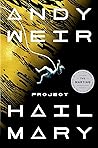
Project Hail Mary

Project Hail MaryProject Hail Mary by Andy Weir
My rating: 4 of 5 stars

I feel like Weir writes solely to explain physics, math, and biology, which I'm not mad about. If I could always get difficult (for me) subjects explained to me in cute, slightly tense, interesting stories, I might have been much better at them. Weirs books also tend to help me believe the premise that no matter what circumstances happen on earth, smart people will come up with a solution. And Grace does seem to think his way out of every hiccup. Weir also sneaks in some questions about who should make decisions--how far should authority go? (is the end of the world reason enough for a dictator? does it necessitate it?). what does sacrifice and bravery look like? how do we impose our own biases on cultures we don't understand? If you go on this ride, you will believe that good will triumph, problems can be solved, and if you know enough math you can save the world.

View all my reviews

Believe it or not, light has momentum.  It exerts a force.  If you were out in space and you turned on a flashlight, you'd get a teeny, tiny amount of thrust from it. 

A Sorceress Comes to Call

A Sorceress Comes to CallA Sorceress Comes to Call by T. Kingfisher
My rating: 4 of 5 stars

4 and maybe a little more, because one of the protagonists is an older lady that gets to find love, and I liked that angle. I liked all of the magic and the fact that the plot twists enough to keep it interesting. Its dark for a coming of age novel, but it's lightened by several humorous scenes. Questions of free will, strength, love and bravery are raised and the answers vary with the character. The underlying issue is what is holding you back? And what would you do move forward?

View all my reviews

The Last Mrs. Parrish


The Last Mrs. Parrish (Mrs. Parrish, #1)The Last Mrs. Parrish by Liv Constantine
My rating: 1 of 5 stars

DNF. I did read over half of this and then it wasn't worth it anymore. I didn't mind the unlikeable narrator or her schemes and I could tell what one of the twists was right away (and I wasn't wrong) but then when the perspective changes to the first Mrs. Parrish, some of the scenes were so totally degrading and humiliating that I couldn't finish. In what I took to be as a light bit of summer revenge reading turned too dark, and I thought the depth of many scenes were totally unnecessary. Wasn't worth finishing.

View all my reviews

Friday, July 3, 2026

Go


GoGo by Kazuki Kaneshiro
My rating: 4 of 5 stars

At the time of this review, the GR average for Go was 3.63 stars which is probably where I'd put it. Such an interesting point of view: a Korean in Japan, otherwise known as Zainichi. Sugihara has been bullied in school because of his heritage and has become a proficient fighter as a result. Slightly hot-headed, he grapples with the idea of nationality vs. heritage--where should his loyalties lie? If you speak the language, eat the food, agree with the politics, are you not a member of the nation? But if your history also includes a race that has been discriminated against do you owe that history and culture a certain amount of loyalty? What if it keeps you from loving someone? Or keeps them from loving you? Sugihara struggles with these questions of identity while navigating school, family, friends, and first love. While extremely intriguing, the writing was a little stilted, which could be part of the frustrations of translation--I have found many Japanese-translated books have a similar style-- so I question whether my opinion is criticism of the writing ,my ignorance of Japanese expression, or just one of those things lost in translation.

View all my reviews

I was just living with the circumstances that I happened to be born into.

Island Beneath the Sea


Island Beneath the SeaIsland Beneath the Sea by Isabel Allende
My rating: 4 of 5 stars

Relating the history of Haiti and highlighting the relationship between Haiti and Louisiana, Allende does a superb job of creating a myriad of characters that represent several perspectives. While she doesn't shy away from the cruelty of slavery, she also shines a light on the spirit of the revolutionary slaves as well as showing the precariousness of the mulatto population. Allende is always best when she when she adds some magical realism and the Haiti religion of voodoo creates a world where mysticism is married to science and is even sought out by some of the white doctors. I felt like I learned a lot about history and geography (even if some subsequent research called into question some of Allende's facts such as the Cordon Bleu balls). This is how I learn history best: by giving me some characters whose fate I care about and help me understand the implications of political and economic policy on the specific people.

View all my reviews

Music is a wind that blows away the years.

In spite of subtleties of color, the mulattoes were united by their shared apsiration to pass for whites and their visceral scorn for Negroes.

doesn't mean anything for me to be free and everyone else slaves

to heal her, as the doctor himself admitted, but to ease her existence.

knowledge comes from Papa Bondye and it belongs to everyone, and if not shared it is lost.

He had heard the Negroes have more capacity for suffering: the proof was that no white could bear what the blacks endured

There is no worse suffering than to love with fear, said Tante Rose

She walked with determination, not thinking about how far she had to go but how far she had come.

[Louisiana] Sold like cattle! Humiliation and fury replaced the festive spirit of the previous day.

Monday, June 1, 2026

The Year of Magical Thinking


The Year of Magical ThinkingThe Year of Magical Thinking by Joan Didion
My rating: 3 of 5 stars

This is often referred to as the seminal work about grief. It is very honest. And I am in the enviable position of not having lost a very close person (yet). I appreciated her emotions and the fact that having to deal with a sudden loss of a loved one while taking care of another loved in precarious health must have been traumatizing. I just found more inspiration personally in C.S. Lewis, Madeline L'Engle, and Julian Barnes.

View all my reviews

In the midst of life we are in death

that the death, even if sudden or accidental, "gives advance warning of its arrival."

Were faith and grief the same thing?

Grief was passive.  Grief happened.  Mourning, the act of dealing with grief, required attention.

yet having seen the picture in no way deflected, when it came, the swift empty loss of the actual event.  It was still black and white.  Each of them had been in the last instant alive, and then dead.

Marriage is not only time: it is also, paradoxically, the denial of time.

when we mourn our losses we also mourn, for better or for worse, ourselves.  As we were.  As we are no longer.  As we will one day not be at all. 

Bear

BearBear by Julia Phillips
My rating: 4 of 5 stars

This tale teeters on the edge of fairy tale. Two sisters living with their dying mom encounter a bear that upends their world. One sister finds herself inexplicably drawn to the bear while the other sees the danger it represents and will do anything she can to stop her sister from befriending it further. It's an intimate look at sisterhood and I loved that aspect. It's also an examination of how systems (medical, police, etc.) often contribute rather than relieve many of the problems its designed to alleviate. Economic disparity, tourism, COVID, and climate change are also discussed. Obviously the bear can stand in for several other issues and that's what creates the fairy-tale-like feeling, making it a magical, but thought-provoking book.

View all my reviews

When she and Elena moved off-island, they would enjoy, she imagined, mentioning to people the beautiful place in which they'd grown up.

Somewhere, somehow, in the space left unexplored by bureaucrats and biologists, there existed possiblities. There might be magic to be found. 

For a moment, in the woods, there was nothing, and then--there it was again.  Its body appeared and vanished.  It was walking the fine line between their human existence and monstrosity.  She didn't know how quickly it could move.

Real care was something else entirely.  A more rare beast.  It was growing up alongside each other, watching one another.  It was the ability to hear what wasn't said. 

The Museum of Failures


The Museum of FailuresThe Museum of Failures by Thrity Umrigar
My rating: 4 of 5 stars

Probably 4.5 stars. One of the best studies of characterization I've read. No one is wholly good or bad and as we follow Remy's thoughts they flit from gratefulness to resentfulness in seconds; from love to anger; from awe to frustration, capturing how we can hold almost two diametrically feelings toward something or someone at the same time. It's a complicated storyline but also simple--a man goes to India to adopt a baby and discovers his mother is ill. He confronts a past that holds secrets he didn't know existed while trying to navigate his two identities as Indian and American. There are disappointments and happy surprises, revelations that shake his world, and make him reassess his beliefs and values. Ultimately hopeful and inspiring, its a reminder that there is always more to the story than we think.

View all my reviews

Contentment, the enemy of art.

But, son, faith is like an armor.  It's for your own protection.  this world can be an unforgiving place.  Faith helps a man from getting buffeted around.

By treating her son as less than human, they had diminished their own humanity.

But if you don't tell your parents, you're depriving them of something.  Don't you see?  You're depriving them of a chance to rise to the occasion.  To transcend their own limitations.

Because, ultimately, everybody's story was written in the scars.

This was how destiny was formed, Remy decided, not by what was written in the stars by some distant god, but by human choice and effort and courage. All he had to do was be brave.

My Family and Other Animals

My Family and Other Animals (Corfu Trilogy, #1)My Family and Other Animals by Gerald Durrell
My rating: 4 of 5 stars

Such a cute, entertaining book about family, nature, exploration, and childhood. The Durrells were definitely an unconventional family, but I found their rather whimsical take on life inspiring. Gerry's descriptions of birds and insects were definitely anthropomorphic but it was hard not to think that these animals weren't causing mischief on purpose. Funny and endearing.

View all my reviews

gently behind us like a white peacock's tail, glinting with bubbles.

if the curious, blurring haze produced a sound, it would be exactly the strange, chiming cries of these insects.

Friday, May 29, 2026

Symphony of Secrets

Symphony of SecretsSymphony of Secrets by Brendan Slocumb
My rating: 4 of 5 stars

I found myself quite drawn into this dual timeline story of a revered composer who isn't quite what he seems. I especially was engaged with the story of Josephine and Fred. Slocumb highlights how those who are not understood or tolerated by the majority can be dismissed or exploited. In both timelines fame and money overshadow morality and it is satisfying when the little guys find ways subvert the powerful, even if it takes a few years for truth and justice to prevail.

View all my reviews

The Unselected Journals of Emma M Lion Vol. 2


The Unselected Journals of Emma M. Lion: Vol. 2The Unselected Journals of Emma M. Lion: Vol. 2 by Beth Brower
My rating: 4 of 5 stars

Yes, this volume is much better than the first. I also think it practically begs to be read out loud, so I can see why so many people enjoy the audio version of this. I still personally wish this was not broken up into so many volumes. Although there is more meat in this volume, there is still a lot of unresolved story lines. I suppose it gets you to read more, but I wish a few more were resolved before moving on. It makes me feel like I have to read all 42 or whatever to get anywhere.

View all my reviews

Thursday, May 21, 2026

Version Control


Version ControlVersion Control by Dexter Palmer
My rating: 4 of 5 stars

At first I was confused about what this book was about: technology, online dating, time travel, race, physics, love., death and grief. Of course, its about all these things. I think the thing that ties them together is the choice we have to choose what version of ourselves we show to others, and what we ultimately will become. I loved how this book progressed and the time travel parts were taken in a completely unique way. (My only issue was the introduction at the beginning of the book of a feeling several people had that something was off kilter but couldn't figure out what it was, which was intriguing --if it got resolved I missed it). Thought provoking, moving science fiction.

View all my reviews

Rebecca had decided to stop thinking about it.

Being is always becoming; people change and stay the same.  What is true for bodies is also true for selves: even the most honest person has maany faces, none of which is false.

because she felt she had to talk about him, rather than merely dealing in silence with the nagging presence of his absence.

"I miss Sean," Rebecca said from the bed, trying not to think that the truth of the feeling she had at that moment (and it was true, it was: how could it not be?) was somehow diminished by the compulsion she felt to perform it.

The Rebecca Wright of thirty-wight, thinking back to the blackout-season Becca of her mid-twenties, would recall that the assignations of the core group were the performace of love, rather than the thing itself.

Then there's that weird moment of mutual recognition, when people who may have exchanged the dearest of confidences in the new world realize that here, in the old one, they are still strangers to each other. 

You're too ambitious.  Your reach is exceeding your grasp.  Like there is such a thing.  Only a person who had already reconciled hemself to a life of mediocrity would even say such a thing.

The thing about memories wasn't that many of them inevitabley faded, but that repeated recall of the ones your remembered burnished them into shining, gorgeous lies.

This is why anyone with common sense would stay the hell away from time travel! Because history makes you what you are.  And if you traveled back in time you wouldn't be you anymore.  You would have a different history, and you would become someone else.  Do you really want to become someone else?

The fear that Moses had of Yahweh was as much of HIs caprice as of His power--He was just as likely to force the Hebrews to wander in the wilderness as He was to rescue them from the Egyptians.  In short, He was not the embodiment of good, but of chance; neither good nor evil, but inscrutable and unavoidable.

If God created humans with the ability to dictate the direction of history (by imagining future states of the universe and steering its path toward one version or another), then humanity's duty to God was to direct history toward the best of all possible worlds.

And when something grievous happened to us that we could never have seen coming, our first and worst impulse was to try to discover what unknown person had done the clear evil that started the chain of events that led to our tragedy, or to wonder whether  that person was, inadvertently, ourselves.

To accept that the machines knew you better than you know yourself involved a kind of silent assent; you liked the things Big Data told you were likely to like, and you lived the people it said you were likley to love.  To believe entirely in the data entailed a slight diminishment of the self, small but crucial and, perhaps, irreversible. 

A version control system checks both copies for changes, and creates a new version of the program that incorporates the changes from both programmers.

If both programmers work on the same secion of code, which is highly unlikely, the version control protocol throws up a conflict flag.  Then the programmers compare code, deicide whch of their revisions was best, and pick that one.  It sounds chaotic, but it works well in practice.

But to find a lingering unread missive from someone no longer living, and someone whoselife had been so deeply entwined with one's own, raised the possibility that the past could never be a fully settled matter.  It meant that your own past could be altered without your action or consent, that the story of yourself that you continually told back to yourself could be revised by force, making you into antoher person who you would, perhaps, prefer not to become.

But think about it thte other way.  As you move through time you forget what you once were.  Ax head and handle change.  But you can send a message tor remind your future self of what you once were.

Science does not have an ego.

Consider the tendecy to view only positive statements in science as valuable.

"Smullin's Priciple":  It is: Science fiction is a fantasy in which science always works.

This is when I began to see and not see, when my mind held two competing truths.

The matter of the frequency shift was small, in the greater scheme of things, and yet it was also immense. I knew that the frequency shift was a sign  that our research was flawed.  And yet I did not know about the frequency shift, because I preferred to be in a world in which I dide not know that our research was flawed, rather than one in which I did.

I could only see how to impose my own will on top of theris, to make the data sow what I wanted to be true, and not what all who looked at the results would agree was true.  And I didn't even know what I wanted to be true, by that point.

or perhaps he realized that any version of reality requires two people to believe in it if it is to have a chance of becoming real.

keeping the secret of my intent to fail from myself

But later I reasoned that although it might be bad at keeping accurate time, it could serve another purpose.  If the watch kept time inaccurately, but the degree of than inaccuracy was itself regular and predictable, then i could use the seconds gained or lost to measure the time elapsed since she had given me the watch.  Therefore I could carry with me an empirical demonstration of the durability of her love.

To agree to a marriage is to consent to a mutual acto of transformation, to promise to ensure that the versions of yourselves that you will becomome will always remain in harmony, though you yourselves can never stay the same.

One of the hard things to deal with in life is the fact that you destroy potential information whenever you make a decision.  You could even say tat's essentially what regret is:  a profound problem of incomplete information.

Let us find our own paths: let us make our own attempts at fashioning this world; let us bear the sting of our own inevitable failures.  To do ttherwise would be to fail Yourself.  And the only thing You cannot do is fail. 

"Human behavior--of individuals, of families, of nations--is predicated on accountability to to the future, but it is also predicated on the persistence of memeory.


Tuesday, May 12, 2026

Harlem Shuffle


Harlem Shuffle (The Harlem Trilogy, #1)Harlem Shuffle by Colson Whitehead
My rating: 5 of 5 stars

This was a great look into Harlem in the 50s and 60s. Ray is a furniture salesman and if he sort of knowingly sells questionable goods his cousin procures for him, well, that's just good business. Things get complicated when his cousin starts involving him more. The divide between the strivers and crooks that used to look so black and white gets blurred closer together throughout the book as the hot summers swelter and Ray is drawn deeper into his cousin's world. I loved Ray's character as well as several of the supporting members (Pepper). His rationalizations and ability to almost divide himself in two are relatable, comedic, and tragic. This is definitely one of the lighter pieces I've read by Whitehead but I enjoyed it all the more for that. The fact that somehow Ray always lands on his feet makes it that much more endearing. Beautiful, beautiful writing--each chapter was its own poem, opus, showpiece. Whitehead has all my respect and awe.

View all my reviews

Carney took the previous tenants' busted schemes and failed dreams as a kind of fertilizer that helped his own ambitions prosper, the same way a fallen oak in its decomposition nourishes the acorn.

Strivers grasped for something better--maybe it existed, make it didn't--and crooks schemed about how to manipulate the present system.  The world as it might be versus the world as it was.   

Plenty of crooks were strivers, and plenty of strivers bent the law.

The heat made Harlem into a forge.  Pepper rode shotgun.

If their words hadn't wakened Elizabeth, then she was asleep for the night, arms reaching out for May, with that new baby in between.  Carney split.

The British called this wakeful interval the watch, Professor Simonov explained, and in France it went by dorvay.  You went over your accounts, whatever they may be--reading, praying, lovemaking, attending to pressing work, or overdue leisure.   It was a respite from the normal world and its demands, a holoow of private enterprise carved out of lost hours.

dorvay was crooked heaven, when the straight world slept and the bent got to work.

Part of moving up in the world is realizing how much shit you used to eat.

Look at it from one way, it was not a place for an angel, look at it from another and maybe it was a place that needed an angel.  And another view was that if it were beautiful, it wouldn't last long there. 

The Frozen River


The Frozen RiverThe Frozen River by Ariel Lawhon
My rating: 4 of 5 stars

A great period murder mystery that was well-paced and character-driven. I loved that Martha and her husband are so in love, for one. I love that she is a believable character--she is feisty and opinionated but a midwife would be, would even encourage that quality in her. I love that her heart is always with her children even though most of them are "grown". Of course it was frustrating to see how the justice system worked back then (and how little it has changed). The mystery was ok although it was only one piece of the puzzle. If the villain is overly evil, it only lets the ending be doubly justified. The atmosphere of the novel was definitely benefited by the setting and season. A well written enjoyable historical novel.

View all my reviews

"an obscene miscarriage of justice"

Monday, April 13, 2026

The Night Tiger


The Night TigerThe Night Tiger by Yangsze Choo
My rating: 4 of 5 stars

I felt like this was a small crash course on Malaysia in the 1950's--the food, culture, language, beliefs, traditions, industry, and attitudes about English colonialism. Then add a some magical realism, a mystery or two and an unusual romance. Perhaps it was a little over ambitious but I enjoyed the story and the characters and learned quite a bit about that part of the world (at least in that time period).

View all my reviews

A keramat animal is a sacred beast, a creature with the ability to come and go like a phantom, trampling sugarcane or raiding livestock with impunity.  It's always distinguished by some peculiarity, such a missing tusk or a rare albino color.  But the most common indicator is withered or maimed foot.

After all, weren't the Confucian Virtues supposed to describe the perfect man?  A man who abandoned virtue lost his humanity and became no better than a beast.  

The Snow Child


The Snow ChildThe Snow Child by Eowyn Ivey
My rating: 4 of 5 stars

A beautiful retelling of a Russian folk tale about a childless couple that builds a snow child that comes to life. The magic in this rendition is that it gives a rational explanation for the magical elements, but still leaves plenty unexplained questions that enchantment can exist if you want. The Alaskan wilderness is its own character, wonderfully described so that you could feel the cold and see the beauty and awe in such a wild place. The story helps us remember the magic and beauty in each child, that miracles can happen if we are willing to help each other, and that love for each other is precious because life is precarious. Very enjoyable book.

View all my reviews

So he, too, was graying.  Each of them fading away without the other's notice.

Wednesday, April 8, 2026

need


need


the geography of my need

is found in your knees,

--connective tissue holding

a petal of bone--

your bone a hillock

raising my diamond depression,

my ballerina-pink satin scar

kissing your sanguine red welt,

our two griefs mating into sunset.

when we stitch them together 

knock-kneed, three-legged,

arm in arm, let our 

free hands violently swing

else we come

tumbling down

my knee on your knee

like your teeth on my ear

like my nails on your throat


Monday, March 30, 2026

Translation State


Translation StateTranslation State by Ann Leckie
My rating: 4 of 5 stars

A beautiful science fiction novel about what it means to belong. Leckie has more imagination in her little finger than most people have their whole lives. She explores belonging across borders of culture, gender, technology (AI), and species (aliens). Can you declare yourself to be something you are inherently not? What are the personal, interpersonal, and political ramifications of that? And even if, say, an alien decides it wants to be human, looks like a human, acts like a human, are there behaviors and urges that will always define them as alien? Leckie deftly shows the ramifications and shortfalls of simply declaring to be something you are not, but also how each character (species) has abilities that benefit the wider universe. She also makes a beautiful case of how a family (chosen, if need be) can be the ultimate place that you belong.

View all my reviews

How do I know what you say is true? I asked.   Words can say things that don't exist.

"You have only small and seemingly pointless choices available to you.  But if there is anything I have been trying to teach you, it is that small actions can have larger consequences.  If one has only small choices available, one must be patient, and canny."

"When you have decided what you want, remember that what one will not acknowledge is what one cannot properly control."

Friday, March 20, 2026

The Dutch House


The Dutch HouseThe Dutch House by Ann Patchett
My rating: 4 of 5 stars

A second reading because: Patchett. This time around focused on how Patchett tells the story by others telling stories, how she used the idea of choice--can you just decide to not feel things? can you decide to feel things?, and the how places (not just the Dutch House) were used as conduits of emotion and reflective of a person's values and ideals (oddly, I realized cars figured predominately as a universally loved and cherished place). Once again, I was struck by Patchett's ability to create full characters (mostly--I have a feeling the stepmom Andrea would like her day in court) and bring a sense of parallelism so that despite the growth and change, there is a sense of closure and justice.

First reading: Ann Patchett can do very little wrong in my book. I liked it even better after book club discussion. It raises a lot of questions, without giving a lot of answers. Themes of class, priorities, judgement, forgiveness, and parenting. And of course, brilliantly written.

View all my reviews

what I felt in those blinded days just after my father's death was not the grief for who I had lot but the shame over what I had done.

That loss was too private, shameful in a way I couldn't understand.

exhausted by the burden of so many petals.

Well, your mother hated it and Andrea loved it.  He thought he'd solved the problem.

New York represented her shame about things that were in no way her fault.

"Home is so sad," Maeve said.  "It stays as it was left, shaped to the comfort of the last to go as if to win them back.  Instead, bereft of anyone to please, it withers so, having no heart to put aside the theft."  Once she was certain Maeve had stopped, Celeste picked up the line in a softer voice.  "And turn again to what it started as, a joyous shot at how things ought to be, long fallen wide.  You can see how it was: look athe pictures and the cutlery.  The music in the piano stool.  That vase."

I'd never been in the position of getting my head around what I'd been given.  I only understood what I'd lost.

Fluffy's stories had stayed fresh because she had kept them to herself. Fluffy still knew what she knew.

Any configuration of luxury seen from a distance felt like a window on my youth.

We had made a fetish out of our misfortune, fallen in love with it.

laying the tremendous burden of her grief and shame directly on my sister's heart.
 
her voice as quiet as a page turned.

They were living together in their own paradise of memory.  

I can use the time I've got to be furious, or I can feel like the luckiest person in the world.

Thinking about the past impeded my efforts to be decent in the present.

Look at the three of us, undone by a house.


Black Leopard, Red Wolf

Black Leopard, Red Wolf (The Dark Star Trilogy, #1)Black Leopard, Red Wolf by Marlon James
My rating: 4 of 5 stars

This is what I appreciated about Black Leopard, Red Wolf: the use of language is exceptional. I felt almost like I was reading a different language and I'll admit it took me at least 10% of the novel before it clicked and instead of struggling through, I was immersed in this strange new world. It's a dark world--dark being an understatement--dark, crude, primal. I'm reading the Old Testament at the same time, and it is definitely the same sort of setting, giants, talking animals, magic, curses, vengeance, violence and sex. There are several passages I had to gloss over just from sheer exhaustion of violence and lewdness. However, I did grow fond of Tracker and his misfit band, laughed, grimaced, cried. There is mystery, comedy, romance, family drama, power struggles, riots and uprisings, monsters and witchcraft. Some of the most original world-building as well as some of the scariest monsters I've encountered. The ending seems to show that humans are the cruelest of all the monsters and the most illogical--how we will grab at power regardless of its consequences (for ourselves, our country, even the instrument of power itself). I wish it was a bit more hopeful, and despite all its virtues, I probably won't ever re-read because it is so dark and crude.

View all my reviews

You kill the boy who is you, to become the man who is you, but everything must be learned. 

night fat with heat

Of all the terrible features of your form, shame is the worst.

Quiet is the opposite of sound, not the absence of it.  This was absence.

The animal had learned of the shame of men, the same man who once said that the Leopard would have been born with skirts if he was supposed to wear any. 

For you to say that sadness is not the absence of happiness, but the opposite of it.

Something to fight for, or nothing to lose, which makes you a finer warrior?  I have no answer.

Even going down, we stood high enough to see all of the city and the flat land beyond it.  I heard once that the first builders of this city, back when this was not yet a city, and them not yet fully men, were just trying to build towers tall enough to get back to the kingdom of sky and start an war in the land of gods.

Our wisdom is foolishness to the foolish.

miracle fruit--makes bitter taste sweet (a real fruit).

It is not that you lie, but that you don't know truth.  There was enough venom spewing from your mouth to kill nine buffalo.

Word is divine wish, they say.  Word is invisible to all but the gods.  So when woman or man write words they dare to look at the divine.  Oh, what power.

Glyphs are supposed to be the language of the gods.

Someone cried that Kongor is lost, for how can we have a future without our past?

Everything in the world cooks down to two.  Either-or, if-then, yes-no, night-day, good-bad.  You all believe in twos so much I wonder if any of you can count to three. 

Thursday, March 12, 2026

Western Lane

Western LaneWestern Lane by Chetna Maroo
My rating: 4 of 5 stars

This is between a 3 and 4. It was a short, sweet read about a young British Indian girl and her family trying to cope with the death of the mother. Gopi's father attempts to bring purpose and routine to the family by training his three daughters rigorously in the game of squash. Gopi, as the youngest, shows the most passion and promise but the pull of grief proves to be too much and the family starts to unravel. What seems to start as a tolerant deference to the father turns into a passion and love of the game for Gopi, if not for her sisters. But Gopi's ghost mother hovers in the pages as different characters attempt to cling to her. It's a little unclear whether it is the obsession of squash and new friends or the ghost of Gopi's mother is responsible for the ultimate dissolution of their family. Although Gopi narrates, there is a dream-like quality to this book, and her intentions and motivations are not obvious.(view spoiler). An interesting read, that could almost have been longer exploring themes more in-depth.

View all my reviews
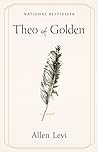
Theo of GoldenTheo of Golden by Allen Levi
My rating: 3 of 5 stars

This is a great uplifting book. It was a good story, and the ending revealed that there is a lot more going on than you originally think. So I may be harsh with three stars, but I found it laborious to get through. It needed a good amount of red pencil--too many descriptions, too precious, too many unneeded details that it gets in the way of the story for me. If it had been tightened up I feel like the story would shine even better (and move along faster). I was glad I got to the end, but it was only because it was a bookclub read.

View all my reviews

Tuesday, March 10, 2026

Lunar Love


Lunar LoveLunar Love by Lauren Kung Jessen
My rating: 4 of 5 stars

It was February--Valentines Day and Chinese New Year so it seemed a perfect excuse to indulge in a cute romance about love and the Chinese Zodiac. It was pretty predictable and a little contrived--Olivia is taking over her grandmother's matchmaking shop in China town that uses the Chinese zodiac to place compatible partners together and Bennett is starting up a mobile dating app using the Chinese zodiac as one of its parameters. Competition, suspicion, hijinks ensue resulting ultimately in true love for everybody. But I found the whole thing delightful for what it was. The descriptions of Chinese food and baking didn't hurt either.

View all my reviews

Real Self-Care


Real Self-Care: A Transformative Program for Redefining Wellness (Crystals, Cleanses, and Bubble Baths Not Included)Real Self-Care: A Transformative Program for Redefining Wellness by Pooja Lakshmin
My rating: 4 of 5 stars

I think what I liked most about this book is that it encouraged you to define your priorities (giving you tools and exercises to identify them) and then come up with ways to align your life to those priorities. I might have rearranged the chapters so defining priorities came before setting boundaries and saying no, but I thought her approach to "self care" which is ultimately being true to yourself and not worrying about what other's may think was spot on.

View all my reviews

When you make a proactive choice, instead of felling like your life is being done to you, you're practicing real self-care.

when you make a life decision that aligns with your values, with your insides, then you don't care about what you're missing out on.

Only when you fully acknowledge the wealth you have in life can you be ready fro mre.  And a funny thing happens when you start appreciating and digesting all the good: You stop caring as much about getting that next thing.  You realize that what you have right now is just as good as what you may have in the future.

When you shut down your negative feelings, you're inadvertently shutting down your ability to experience positive ones as well.

Monday, March 9, 2026

Never Let Me Go

Never Let Me GoNever Let Me Go by Kazuo Ishiguro
My rating: 5 of 5 stars

Ishiguro is just sublime to read. His ability to embody the narrator and tell stories of small things that add up to momentous revelations and emotions is just astounding. I won't detail the plot here because that is part of the joy of this book. But I thought the examination of what makes us human and what constitutes a soul was so subtly and artfully done. I thought it was a beautiful and eloquent book, riveting to read, and much to reflect and think about.

View all my reviews
Ruth had been right: Madame was aftraid of us.  But she was afraid of us in the same way someone might be afraid of spiders.  We hadn't been ready for that.  it had never occurred to us to wonder how we would feel, being seen like that, being spiders. 

When I watched you dancing that day, i saw something else.  I saw a new world coming rapidly.  more scientific, efficient, yes.  More cures for the old sicknesses.  Very good.  But a harsh, cruel world.  And I saw a little girl, her eyes tightly closed, holding to her breast the old kind world, one that she knew in her heart could not remain, and she was holding it and pleading, never to let it go. 

keep thinking about this river somewhere, with the water moving really fast.  And these tow people in the water, trying to hold onto each other, holding on as hard as they can, but in the end it's just too much.  The current's too strong.  They've got to let go, drift apart.  That's how I think it is with us.  It's a shame, Kath, because we've loved each other all our lives.  But in the en, we can't stay together forever. 

The Immortal King Rao


The Immortal King RaoThe Immortal King Rao by Vauhini Vara
My rating: 4 of 5 stars

This felt like three books in one: the story of King growing up in India, of coming from the poorest caste and how he overcame poverty and prejudice to become a titan of technology, business, and politics; the story of him and his daughter, Athena, secluded on an island where King is Athena's whole world until she inevitably chafes under his control and runs away to join dissenters; and the story of Athena in jail in a world different from ours but maybe not so far from the future. All the stories are well told and intriguing. There is a lot of exploration of technology and how we sacrifice privacy, uniqueness, and personal values for easy knowledge and convenience. Algorithms can take the difficulty of sifting out truth, can help us determine our style, can entertain us without boring us. But what if the algorithms start determining what and who you are? Is that any different than the caste system King was born into? You question whether the world King helps design is any more civilized or compassionate than the rural coconut farm he grew up in. Also loved the allusions the Greek myths and tropes--emphasizing that humanity keeps reaching for an idealized civilization only to be undone by humanity itself.

View all my reviews

Friday, March 6, 2026

The Unselected Journals of Emma M Lion


The Unselected Journals of Emma M. Lion: Vol. 1The Unselected Journals of Emma M. Lion: Vol. 1 by Beth Brower
My rating: 1 of 5 stars

I have heard this is a great read from people whose opinion I respect so I may continue to one more. But I could not give this "book" (installment) more than one star because it is not a book. It is an introduction (and pretty slow at that). Just when something starts to happen--a stranger moves in to Lapis Lazuli, the book ends. I resent that I have to "buy" another book to continue. It's not a cliff hanger--you have to have enough action to get to a cliff for that. What's more, it is presented as diary entries and most of these are the least believable diary entries ever. Who says "now I will describe the neighborhood" and proceeds to pen 3 pages? No, maybe you draw a map. You don't describe what you look like. You don't explain things and people you already know. Also, what a stupid uncle--what idiot spends money just to be petty when it will make them destitute as well?

View all my reviews

The Correspondent

The CorrespondentThe Correspondent by Virginia Evans
My rating: 4 of 5 stars

This epistolary novel was very well done. The plot unfolded organically in the letters and replies to several recipients. What I especially loved was that different "voices" were used depending on whom she was writing to--in one letter she'd be enthusiastic about say, the opportunity to eulogize a colleague, and then in another she'd bemoan the fact that she'd have to do it. We see fights erupt and heal, regrets resolved, relationships grow and change, decisions made, acceptance grow and challenges met. Evans does all this with the salt of humanity--never making her protagonist overly sentimental or the lessons overly explicit--just a mortal muddling through and being inspirational because of it.

View all my reviews

one has committed oneself to the page, the tragedy I've just laid out will not apply.  Imagine, the letters one has sent out into the world, the letters received back in turn, are like the pieces of a magnificent puzzle, or, a better metaphor, if dated, the links of a long chain, and even if those links are never put back together, which they will certainly never be, even if they remain for the rest of time dispersed across the earth like the fragile blown seeds of a dying dandelion, isn't there something wonderful in that, to think that a story of one's life is preserved in some way, that this very letter may one day mean something, even if it is a very small thing, to someone?  If all of this amounts to you as nothing than drivel, then you might allso consider a simpler value of the written letter, which is, namely, that reaching out in correspondence is really one of the original forms of civility in the world, the preservation of which ahss to be of some value  we cannot yet see.  The WRITTEN WORD, Mr. Watts.  The written word in black and white.  It is leters.  It is books.  It is law.  It's all the same.  

Monday, February 23, 2026

Tell Me Everything

Tell Me Everything (Amgash, #5)Tell Me Everything by Elizabeth Strout
My rating: 3 of 5 stars

This book focuses more on Bob, Lucy's friend, who is a lawyer. She calls him a "sin-eater" because he tends to take on other people's problems. He does display a lot of empathy and compassion, but he also is quick to judge and play the martyr. The point of this book seems to be that everyone has good and bad traits, everyone is dealing with some sort of trauma, everyone could use a bit of understanding and compassion, even those who don't seem to need it. And by giving people a bit of kindness we can change their lives for the better. There is also the theme of choice running throughout the Amgash novels--you can decide how you see people and Bob is the latest example of this:should he decide to love Lucy or to love his wife? How our minds will quickly perceive what we want to line up with our choices. And then the idea that you can love everybody, not just people you know, and not all in the same way. I enjoyed that this book seemed to have a bit more meat to it than the former ones in the series, but still was frustrated with the formatting of the book. Why so many breaks and spaces? It broke up thoughts and narratives for me, and was distracting rather than enhancing. I so enjoyed Olive and the early books of this series but will preview before I read any others...the last three were harder to get through.

View all my reviews

Thursday, February 12, 2026

Lucy By the Sea


Lucy by the Sea (Amgash, #4)Lucy by the Sea by Elizabeth Strout
My rating: 2 of 5 stars

It turns out that what I liked about Lucy was actually not Lucy.-- it was all the stories of the people around Lucy in the first two novels of this series. I didn't enjoy O William! as much and this novel continues with Lucy and William's relationship. Telling the story of Lucy and William during the pandemic, it is almost as painful as the pandemic itself was. It is slow and claustrophobic. And the amount of times it is mentioned that who wears masks, who wears them halfway, who hand shakes and who dutifully quarantines the whole 2 weeks--it comes off as judgey and condescending and snooty. Lucy is full of fear and seems completely incapable of acting for herself. Even when she finally gives (good) advice to her daughter she immediately recants it. The only good thing is that Lucy's foil--Olive--makes an appearance once in awhile.

View all my reviews

Less


Less (Arthur Less, #1)Less by Andrew Sean Greer
My rating: 3 of 5 stars

A droll adventure tale of an author who is circling the globe to get away from his ex-lover's wedding. Lots of things go wrong, some terribly, and some things go right. The destinations sound like a bucket list, though and I was happy to armchair travel along. It's a fine book, well-written, good characters. A good solid book, but kind of forgettable so I feel like I don't know what the parameters are for the Pulitzer.

View all my reviews

He kisses--how do I explain it?  Like someone in love.  Like he has nothing to lose.  Like someone who has just learned a foreign language and can use only the present tense and only the second person.  Only now, only you.

Wednesday, February 11, 2026

Kingdom of the Golden Dragon


Kingdom of the Golden Dragon (Eagle and Jaguar, #2)Kingdom of the Golden Dragon by Isabel Allende
My rating: 4 of 5 stars

I did not realize that this was part of series, or that it was a YA novel when I started. Turns out I was able to jump right into the action, past adventures being succinctly summarized. I could tell it was YA because it (uncharacteristicly for Allende) glossed over violence and sex. Not to say that there isn't action and romance and quite a bit of (believeable) magic. Themes of integrity, bravery, compassion and change. I would whole-heartedly recommend for YA readers and adult readers.

View all my reviews

Snow Crash

Snow CrashSnow Crash by Neal Stephenson
My rating: 4 of 5 stars

I have read Stephenson before ( Seveneves) and really enjoyed it, and so read this because it is touted as his most famous novel (somewhere). At first I was put off by the amount of world-building Stephenson gets caught up in. (But I also acknowledge that the level of detail and ingenuity is partially why it is so popular--because people can take these building blocks and build on them --if only in their imagination). But by the end, I was immersed in this "future" world (it was written in 1992, and can only imagine that Stephenson was writing of a future close to our actual timeline based on context clues). I loved Hiro Protagonist, a coder that helped create the Metaverse which is a virtual reality world that closely resembles a lot of virtual worlds that now exist. The main thrust is a motley group of programmers, couriers, and tech geeks trying to stop the spread of a language virus. There is so much dense information on the history of language and the philosophy of how language shapes us/ we shape language--I loved it. Delivered in a glib conversations

View all my reviews
Condense fact from the vapor of nuance.

This Snow Crash thing—is it a virus, a drug, or a religion?” Juanita shrugs. “What’s the difference?”

“All people have religions. It’s like we have religion receptors built into our brain cells, or something, and we’ll latch onto anything that’ll fill that niche for us.

“Computers rely on the one and the zero to represent all things. This distinction between something and nothing—this pivotal separation between being and nonbeing—is quite fundamental and underlies many Creation myths.”

nam-shub--words that lead to action

Many linguists have tried to understand Babel, the question of why human language tends to fragment, rather than converging on a common tongue.”
Babel--Bab means gate and El means God "Gate of God"
The tower is described, literally, as 'its top with the heavens.' ...actual Babylonian ziggurats have been excavated, astrological diagrams--pictures of heavens--have been found inscribed in their tops.
“He believed that Babel was an actual historical event. That it happened in a particular time and place, coinciding with the disappearance of the Sumerian language. That prior to Babel/ Infocalypse, languages tended to converge. And that afterward, languages have always had an innate tendency to diverge and become mutually incomprehensible—that this tendency is, as he put it, coiled like a serpent around the human brainstem.”

“He felt that the nam-shub of Enki was a neurolinguistic virus.”

me--rules or principles that control the operation of society, like a code of laws, but on a more fundamental level
“In many Creation myths, to name a thing is to create it.

Hammuarbi. The Code of Hammurabi is a well-preserved Babylonian law code of ancient Mesopotamia, dating back to about 1754 BC. It is one of the oldest deciphered writings of significant length in the world. The sixth Babylonian king, Hammurabi, enacted the code, and partial copies exist on a man-sized stone stele and various clay tablets. The Code consists of 282 laws, with scaled punishments, adjusting "an eye for an eye, a tooth for a tooth" (lex talionis) as graded depending on social status, of slave versus free man.Nearly one-half of the Code deals with matters of contract, establishing, for example, the wages to be paid to an ox driver or a surgeon. Other provisions set the terms of a transaction, establishing the liability of a builder for a house that collapses, for example, or property that is damaged while left in the care of another. A third of the code addresses issues concerning household and family relationships such as inheritance, divorce, paternity, and sexual behavior. (from The Code of Hammurabi Amazon selling site)

Kramer and Maier--Myths of Enki the crafty God 
from Snow Crash-- Enki brought water  by masturbaating and giving his "water of the heart""Enki's most important role is as the creator and guardian of the me and gis-hur--'key words' and 'patterns' that rule the universe.  
In one myth, the goddess Inanna goes to Eridu and tricks Enki into giving her 94 me and brings them back to her hometown...they are like algorithms for carrying out certain activities essential to society.  Some of them have to do with the workings of priesthood and kingship.  Some explain how to carry out religious ceremonies.  Many of them are about the arts and crafts: music, carpentry, smithing, tanning, building, farming, even such simple tasks as lighting fires."
"The operating system of society"
To these people water equals semen (?).  Enki's water--his semen, his data, his me--flow throughout the country of Sumer and cause it to flourish
They took the clay directly from the riverbeds
So Enki even provided them with their medium for conveying information--clay.  They wrote on wet clay and then they dried it out--

The Kabbalists--Jewish mystics of Spain and Palestine--believed that supernormal insight and power could be derived from properly combining the letters of the Divine Name
George Steiner: relativists tend to believe that language is not the vehicle of thought but its determining medium.
Hence, the study of the evolution of language is the study of the evolution of the human mind itself.”

Universalists believe that if you can analyze languages enough, you can find that all of them have cetain traits in common.  

“The universalists think that we are determined by the prepatterned structure of our brains—the pathways in the cortex. The relativists don’t believe that we have any limits.”

So Lagos was trying to say that the newborn human brain has no structure—as the relativists would have it—and that as the child learns a language, the developing brain structures itself accordingly, the language gets ‘blown into’ the hardware and becomes a permanent part of the brain’s deep structure—as the universalists would have it.”
Enki somehow understood the connection between language and the brain, knew how to manipulate it...That gave him the power to create nam-shubs.  And nam-shubs had the power to alter the functioning of the brain and the body. 

The tongue of Eden was like a flawless glass; a light of total understanding streamed through it. Thus Babel was a second Fall.’