Monday, December 15, 2025

Anything is Possible

Anything Is Possible (Amgash, #2)Anything Is Possible by Elizabeth Strout
My rating: 5 of 5 stars

Strout does such a good job in creating significance in the insignificant. Everyday life unfolds with great and terrible consequences, yet she finds grace and hope in small acts too. Each chapter centers on a different character loosely connected with Lucy Barton and the small town in Illinois where she grew up. Each of them struggles, usually internally, with their scars that happened in the past and how this affects what is happening to them now. In most cases, they overcome it with help from those around them who show an unexpected kindness or forgiveness. We all hurt one another, but we can all help one another heal, too, she seems to say. Strout writes in small episodes connected by references to past chapters, so it helps to try to keep track of minor characters because they may become the main character in a few chapters in the future. However, if you lose track, the stories are satisfying by themselves, too.

View all my reviews

That Kind of Mother


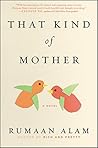
That Kind of MotherThat Kind of Mother by Rumaan Alam
My rating: 3 of 5 stars

This novel attempts to cover a lot of ground: balancing career with motherhood, hiring out care vs. staying home, mixed race adoption, divorce, single parenthood. While the protagonist grapples with all of these issues, I didn't really feel any of angst these issues would produce. Near the end I realized the author was actually a man, and I think he missed the essential feelings of guilt that would exist in a female. While Rebecca sometimes dithers before making a decision, she never questions her choice once she has made it and sometimes blithely disregards the consequences. For instance, when her black child's adult sister explains about skin care Rebecca waves it off as"skin is skin" and then, while realizing her faux pas, we don't see her researching any other differences in grooming, health care, or culture that might affect her adopted son. Perhaps being "that kind of mother" means not second-guessing or worrying about messing up your kids, but I haven't meant a mother yet that doesn't feel some of that anxiety.

View all my reviews

The Underground Railroad

The Underground RailroadThe Underground Railroad by Colson Whitehead
My rating: 4 of 5 stars

Yes, Whitehead is a great writer. Yes, this novel is important because it recounts the atrocities this country has committed to people of color. I think when I read it was a science fiction take on the underground railroad, I was hoping for a bit more metaphor and a bit more hope than what I felt this take offered. Yes, the underground railroad in this book is an actual railroad under the ground--but it leads only to different spectacles of horror--eugenics, "historical" tourism, extermination orders, vigilantes,etc. While taken to extremes in cases, all of these scenarios existed in our past (and in some ways now) so it is a truthful and powerful novel in that way. However, its relentlessness made it hard to read much at a time.

View all my reviews

Sometimes such an experience bound one person to another; just as often the shame of one's powerlessness made all witnesses into enemies.

When the slaves finished, they had stripped the fields of their color.  It was a magnificent operation, from seed to bale, but not one of them could be prideful of their labor.  It had been stolen from them.

In death the negro became a human being.  Only then was he the white man's equal.

If Tennessee had a temperament, it took after the dark personality of the world with a taste for arbitrary punishment. 


Bitter Orange


Bitter OrangeBitter Orange by Claire Fuller
My rating: 4 of 5 stars

An excellent psychological thriller. Fuller paces things so that new information is not only surprising but throws color on the past as well. And the while they are surprising, they are also not jolting--she lays enough ground work to make the revelations plausible. Atmospheric, haunting, slightly disturbing, but such a great read! Not all questions get answered, but that just lets the mystery linger...

View all my reviews

Friday, December 12, 2025

Girlhood


GirlhoodGirlhood by Melissa Febos
My rating: 4 of 5 stars

Febos knows how to dial into the crux of matters. Although some of her personal experiences may not vibe with everyone, I think every woman can relate to issues such as being objectified, feeling responsible for another's (read: male's) feelings of rejection, how our perception of our bodies lead to self-hate, promiscuity, shame, etc. Febos successfully weaves personal experiences, literature, and pop culture to examine the female experience. While she doesn't give easy answers, she provides a lot to consider and question.

View all my reviews

To say: no person, trying to take responsibility for her or his identity, should have to be so alone. There must be those among whom we can sit down and weep, and still be counted as warriors.
Author’s Note
I no longer think that the pains or darkness of my own girlhood were exceptional. It is a darker time for many than we are often willing to acknowledge. During it, we learn to adopt a story about ourselves—what our value is, what beauty is, what is harmful and what is normal—
Prologue: Scarification
It is better to choose your pain than to let it choose you.
Kettle Holes
In some inchoate way, I understood that desire led to fear that could lead to hate—all without ever obliterating that original want.

A mystery solved is always a death: that of possibility, denial, the dream of our own invincibility.

The true telling of our stories often requires the annihilation of other stories, the ones we build and carry through our lives because it is easier to preserve some mysteries. We don’t need the truth to survive, and sometimes our survival depends on its denial.
The Mirror Test
“The mirror represents the perspective of the others on my body: by taking over this perspective on myself, self-consciousness is constituted. An essential step in this process is marked by the development of shame.”

To be called a slut is tantamount to being one, she tells her daughter. Society creates you.

This is the brilliance of shame as a tactic of domination: it conditions us to maintain our own isolation.

I have since learned that recognizing the invisible parts of oneself in another person can feel like a radiant kind of love.
Wild America
Our power may be innate, but we learn its meaning from others.

How wrong I had been about freedom. I had mistakenly thought that beauty was the price of it, that I must succeed at erasing myself in order to be myself. In fact, it was the opposite. Only when I divested from the systems that benefited from my self-hatred could I relinquish it and glimpse freedom.

Intimacy, I’ve found, has little to do with romance. Maybe it is the opposite of romance, which is based on a story written by someone else. It is a closeness to another person that requires closeness with oneself. It is not watching lightning strike from the window but being struck by it.
Intrusions
The pathology of victimhood would also claim that self-blaming and shame were my very ordinary attempt to explain what had happened to me, to assert control over it by assuming responsibility.

“Men look at women. Women watch themselves being looked at … Thus she turns herself into an object—and most particularly an object of vision: a sight.”
Thank You for Taking Care of Yourself
Secrets, if initially a source of power to their keepers, often transmute into a source of shame over time.

One of the dictionary definitions of the word unspeakable is “too bad or horrific to express in words.”

see two powerful imperatives that collaborate to encourage empty consent: the need to protect our bodies from the violent retaliation of men and the need to protect the same men from the consequences of their own behavior, usually by assuming personal responsibility. It is our shame, our embarrassment, our duty alone to bear it.

That is, it was preferable to tolerate sex she didn’t want than to tolerate the displeasure of men.

Sex and “love” were dues we owed to society for much, much longer than they have been voluntary routes to our own fulfillment.

If neurologists and psychologists conducted a study of women who had given empty consent, how many symptoms would they identify that we commonly associate with trauma?

It is not a coincidence that the apex of feminine beauty is nearly identical to that of physical powerlessness.

The only thing that renders the awkwardness of affirmative consent greater any of these awkwardnesses is that the onus of it does not rest entirely on the shoulders of the most vulnerable.

A body isn’t very well loved by the person who abandons it when its needs conflict with the desires of strangers.

If I have learned anything by writing this, it is that consent is a form of communication that happens first within the self.

Sometimes what I mean by healing is changing.

We must choose it over and over.
Les Calanques
Once in a while, I’ll give a few dollars to a panhandler who I know is going to spend it on dope. There are days when the next high is the only mercy available to us. Sometimes our best efforts at self-preservation look like a kind of violence.

A thing of unknown value has no value, and I treated myself as such.

The more I know my own worth, the less I have to fling myself against anything. 

American Spy

American SpyAmerican Spy by Lauren Wilkinson
My rating: 4 of 5 stars

A great spy novel where the protagonist is a mother running from her past. Pacing, character development, intrigue--all great! Great exploration on American involvement in foreign governments, idealism, feminism, and motherhood.

View all my reviews

 But recruiting and running informants was about cultivating their trust.  To do that I found it worked best to lie frequently to them.

I learned that a secret is power, that power in application is force, that force is strength and strength advantage.

Real democracy has to develop in response to the needs of that society.

The Pull of the Stars

The Pull of the StarsThe Pull of the Stars by Emma Donoghue
My rating: 4 of 5 stars

Donoghue does such a remarkable job of creating feelings and emotions by simply relating unrelenting detail of life. She did it in Room and she does it here. At first I was a little exasperated at the chunk of text without chapter or other breaks but soon saw the sheer relentlessness of the page as a brilliant device--the lack of quotation marks was another great choice as the whole narration becomes a sort of fever dream. When the first break happened a third way into the book I felt like I had been completely immersed in Julia's world (and mind). Also like Room I felt like some of the intensity was lost in the second half of the novel. I felt like some of it became repetitive and the love story seemed to come out of nowhere--the same feelings could have been produced without introducing the romantic element, in my opinion. So interesting that Donoghue started writing this before COVID and how so many of the same elements played out in both pandemics. (We thought we were so unique...)

View all my reviews

Skipping Christmas

Skipping ChristmasSkipping Christmas by John Grisham
My rating: 2 of 5 stars

Perhaps this is a good book to read to help evaluate why we run around at Christmas thinking we have to do everything and spend money we don't have, and how mostly its to appease people and keep up appearances. But also how traditions are what create memories and bring people together. The community spirit in the end makes the book a good read, but most of it feels like a drawn out short story. Also surprised by the casual racism.

View all my reviews

Like A Bird

Like a BirdLike a Bird by Fariha Róisín
My rating: 1 of 5 stars

DNF. I give this one star because it had so many elements that should have been made a good novel--the exploration of a mixed-race family where the siblings carry dominant traits from alternate parents and how that shapes their world-view, their family dynamics, and their self-esteem; the protagonist goes through trauma and is helped through it by being able to see dead relatives; her parents throw her out of the house because they believe she is promiscuous when she was really raped and she has to build a life on her own. Any of these would make a good premise to read, but unfortunately the actual execution was excruciating to read. So many inconsistencies, improbable actions and situations. Also, in my opinion the writing read flat and the dialogue stilted. Not sure how this ended up on Best Of lists....

View all my reviews

My Monticello


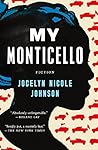
My MonticelloMy Monticello by Jocelyn Nicole Johnson
My rating: 4 of 5 stars

A nice collection of short stories playing with voice and perspective--engaging and enlightening, examining ideas of race and family. The novella at the end "My Monticello" was especially memorable--I could see it being a novel or movie.

View all my reviews

Thursday, December 4, 2025

The Book of V.


The Book of V.The Book of V. by Anna Solomon
My rating: 5 of 5 stars

Growing up, the story of Esther was a favorite because it was one of the few stories in the Bible where the hero is young woman. The focus was always on her bravery and saving her people when no one else could. We knew she was brave because she approached the king without his requesting her, and this might have led to her death. But we know this because there was a former queen, Vashti, who was (assumed) killed when shed didn't come when the king requested her. It's a simple story but the Bible leaves a lot of space in the plot, and there are a lot of thoughts as to why and how the king demanded Vashti's audience and why she turned him down; how Esther was caught the eye of the king to become his second wife; and the character of the king himself. Between Purim pageants and scholarly theories, Esther's story contains multitudes. Solomon adds to this by creating a whole new allegory of women's power. Using three different women in three time periods Solomon explores both the power and vulnerability of women --they both use sex as a weapon, and exploited in return; they grapple with ability to create and how that creation can be useful, powerful, or demeaned or even used against them; how we often let men define our power and try to please them instead of defining ourselves; and how if we are lucky we can build a community of women around us to support us and our creativity. I thought it was particularly interesting that Solomon focuses on domestic arts and knowledge as a means of creation and expression and found truth in the idea that these acts which can be dismissed as women's work (such as sewing, cooking, etc.) are really great expressions of love, passion, tradition and identity. Sex does play a dominant role in this book, but used in a way to illustrate the way both genders use it as a power over the other. I enjoyed all the timelines in this book and thought the writing was fabulous. I loved how the deliberate parallels in the stories evoked themes and ideas that were explored from so many angles.

View all my reviews

My heart isn't hard, Lily thinks.  It's only stretched, and a little faded--often there is only enough space for her own kids' shit and string beans.

Better than becoming a beast would have been to become a man.

their desire for the dresses was not about having something but being it. 

Even if a shred of magic were buried somewhere in him, he would not be able to access it; to access it, you had to be receptive; to be receptive you had to be capable of admitting all you did not know.

anyone would think first to fly, above the earth, and, when that didn't work, to go through.


Having and Being Had

Having and Being HadHaving and Being Had by Eula Biss
My rating: 4 of 5 stars

This felt like having a conversation with a friend. Bliss researches and then asks questions, she talks to people and then muses over what they told her. The chapters are short, each sort of dovetails into the other and the content, while mostly about capitalism, art, value, and money meanders as your thoughts or a good conversation would. She doesn't give any pat answers or come to any conclusions (except maybe what she values in her personal life) but it raises enough food for thought to be interesting. The only thing I didn't like was her revelation to write this book so that she could afford to write other books, which colored the whole project for me into more of a pretense than a true examination of the subject.

View all my reviews

its earliest usage, consumption always implied destruction.

What is destroyed when we think of ourselves as consumers, Graeber suggests, is the possibility that we might be doing something productive outside of work.

money is not to blame for this, Piff suggests. What’s to blame is the comfort that a higher class status affords—the independence, the insularity, the security, the illusion of not needing other people.

They don’t boast about their wealth, but about their thrift. They talk about looking for good deals and driving old cars.

Credit is a form of optimism, Yuval Noah Harari suggests. It depends on the belief that the future will be more prosperous than the present.

Credit creates the illusion of equality, in that we can all buy the same things on credit, but we can’t all pay the debt back.

The social cost of some things is their very cheapness.

Work, if we are fortunate, is rewarded with money, but the reward for labor is transformation.

Bureaucracies have a way of making work out of labor and—

Toil is the word Galbraith uses for work that is fatiguing and monotonous and a source of no particular pleasure.

Part of what makes a job good, they understood, is the sense that what you do matters.

Perhaps we should all keep a memento of the Titanic, just to remind ourselves of how safe disaster feels.

Art unmakes the world made by work.

“We are all communists with our closest friends,” David Graeber writes, “and feudal lords when dealing with small children.” We move between different systems of moral accounting, he writes, but all social systems, including capitalism, rest on a bedrock of everyday communism. By everyday communism he means the principle: “From each according to their abilities, to each according to their needs.” An entire economy couldn’t be organized this way, Graeber argues, but many of our daily interactions already are. This is how we exchange information, for instance, in conversation.

Ketman, my brother says, is the word Miłosz used for living undercover, in secret opposition to the regime that wrote his paycheck. He borrowed the concept from Islamic theology, which allowed true believers to conceal their faith when surrounded by unbelievers. For Miłosz, ketman was something like the art of passing. “To say something is white when one thinks it black,” he wrote, “to smile inwardly when one is outwardly solemn, to hate when one manifests love, to know when one pretends not to know, and thus to play one’s adversary for a fool (even as he is playing you for one).” That is the game of ketman.

“It is a way of living with contradiction,” Jacob Mikanowski writes. “It allows those adept at it to create private sanctuaries of the mind, untouched by compromise, even as compromise floods the rest of their lives.”

Precarious was Merriam-Webster’s word of the day recently. This is how I learned that “depending on the will or pleasure of another”
it comes from the Latin for prayer.

“Who enters the precariat?” By everybody, he means potentially anybody.

Some people choose their precarity—evidence that precarity is not just a condition of our time, but a response to

Their very existence is unsettling, suggesting, as it does, that there might be something worth more than security.

John noticed that affluence is the French word for the tributaries of a river.

The people here believe that if artists are successful then their success should produce all the money they need. And if they aren’t successful then they don’t deserve money.

Cars don’t always signal their intentions. And cars aren’t always nice to each other, though they usually show each other some respect in deference to the damage they can do to each other. They are like important men in conversation with other important men. Bicycles are sometimes kindly accommodated by cars, often ignored, occasionally respected, sometimes nervously followed, and frequently not even seen. In this sense, riding in traffic is not unlike being a woman among men.

On a bicycle, I’m alert, aware of everything. It’s exhilarating, the narrow margin, the exposure to injury, the steadying force of the spinning wheels. And then, for the sake of comfort or convenience, I get into a car. The sound of the street is dulled. I sit back and turn on the radio. I become distracted. Speed is easy, unearned, and bicycles are now an annoyance. I forget who I was just moments ago.

Pleasure is not necessarily harmful, he writes. But it “outrages that part of us which is concerned with growth.”
A Long Petal of the SeaA Long Petal of the Sea by Isabel Allende
My rating: 4 of 5 stars

Such an interesting history of immigrants from Spain to Chile, adjacent to the life of Pablo Neruda, whose poems are scattered throughout the book. It's a history of a particular group of people, but also the history of Chile. It's also a beautiful love story between two people thrown together by circumstance but then to grow to realize how deep and sweet love grows in the trials and joys of life. If it was missing a little magic, it was still a satisfying, enlightening read.

View all my reviews