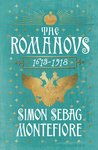
 The Romanovs: 1613-1918 by Simon Sebag Montefiore
My rating: 4 of 5 stars
Since I knew only the most titillating bits of the Romanovs (Rasputin, the execution of the family), this was highly educational. Who knew that their reign began clear back in 1613, included Peter the Great and Catherine the Great? I didn’t. This book, while long, still spans 300+ years. Montefiore does this brilliantly. While there were some sentences in every chapter I couldn’t make sense of, he does a very respectable job in helping the reader follow a myriad of cousins, servants, lovers. He has multiple lists of characters at the beginning of each chapter and family lines at the beginning of each “act”, but I do wish he also included more maps. He does a good job following all the politics but focuses on some of the more scandalous and eccentric stories and anecdotes, but isn’t that what we all really want to know about anyway? Nice epilogue that shows how the Romanovs legacy still affects politics today. Also tons of pictures in the back.
View all my reviews
His brother Mikhail wittily expressed his “astonishment that a
man of such excessive stupidity could still lose his mind.”
Alexander understood that “The most dangerous moment for a bad government is when
it begins to reform,” as Alexis de Tocqueville had recently put it
Newspapers mushroomed. “I’ve never
been greatly enamoured of writers in general,” Alexander confided to Bariatinsky,
“and I’ve sadly concluded that they are a class of individuals with hidden motives
and dangerous biases.”
The literary salons
of Moscow became the battlefield of a debate on the nature of Russia itself between
so-called “Westerners” and “Slavophiles.”
First, my orders would not be carried out unless they were the
kind of orders that could be carried out
Rulers are often
killed not for brutality but for inconsistency.