Wednesday, March 31, 2021

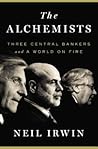
The Alchemists

The Alchemists: Three Central Bankers and a World on FireThe Alchemists: Three Central Bankers and a World on Fire by Neil Irwin
My rating: 4 of 5 stars

This book may be a little dated now, but it is still a great introduction to size, scope, and function of central banks and bankers. I am embarrassingly ignorant of all these things so for me it was enlightening and educational. Irwin starts with the first central bank in Sweden in the 1660s and outlines the basic history and roles of central banks in everything from the Great Depression to the inflation of the Nixon years. Most of the bank focuses on the years from 2007-2012, during the bank bailouts, Greece's struggle, and the subsequent actions to normalize the economies since. I realize how entangled all the economies in the world are, and sometimes felt like it is good and right that these technocrats can figure out what needs to happen to keep the economies at an even keel. Other times I was amazed (and a little horrified) to realize how much power these few men hold. Holding the purse strings carries a lot of power--and the wrong decisions can cause economic disaster, depressions, war. Irwin definitely sides with the bankers, his portrayal shows them making the best decision they could at the time, and entrusts that they will learn by their mistakes. He points out that despite criticism, these three men (Berneke, King, and Trichet), averted the worst pitfalls of what could have happened. Although the book ends 10 years ago, (it was published in 2013), I still feel like I learned a lot and can understand the Fed's role and the different strategies it uses.

View all my reviews

Bobcat and Other Stories

Bobcat and Other StoriesBobcat and Other Stories by Rebecca Lee
My rating: 4 of 5 stars

I loved this collection of short stories. Every one of them felt like a little novel. The writing was fantastic and the characters deeply satisfying. Most of these stories explore the idea that we know things before we know them, about love and betrayal, about marriage and parenting. Deeply engrossing and thoughtful, there are too few stories in this collection, and I hope to see another collection soon.

View all my reviews

The bird, which was a bronze talismanic centerpiece, golden and thriving, is revealed as a collection of crazy bones.

“This is the power of the sentence,” he said. “It acts out this drama of control and subversion. The noun always stands for what is, the status quo, and the verb for what might be, the ideal.”

I had read that the ability to use language and the ability to tame fire arose from the same warm, shimmering pool of genes, since in nature they did not appear one without the other.

The line people draw between the things they consider this and the things they consider that is the perimeter of their sphere of intimacy. You see? Everything inside is this; everything inside is close, is intimate. Since you pointed at the cream and it is farther from you than I am, ‘this’ suggests that I am among the things you consider close to you. I’m flattered,” he said, and handed me the creamer, which was, like him, sweating. What an idea—that with a few words you could catch another person in a little grammatical clutch, arrange the objects of the world such that they bordered the two of you.

language did not describe events, it handled them, as a hand handles an object, and that in this way language made the world happen under its supervision.

These were extremely wealthy people, and money moved through the room as if it were oxygen, or time—in such abundance it was no longer visible.

“Only a man who hates his privilege can be trusted with it.”

"Well, I guess I mean romantic in the large sense, you know.The threshold is the moment one steps inside, out of the cold, and feels oneself treasured on a human scale.”

where women are frequently turned into heifers when the men can no longer live with them, or without them.”

Another cow shuddered awake beside me and looked up at me, half in sympathy, half in resignation to all my shortcomings, which is the very look cows always give, which is their whole take on the world.

Somehow Lesley had found the rabbit hole into real life, while I had continued on this other precarious path—single and free and mostly what I wanted, but still, there wasn’t any real food, it seemed, no soups or stews or casseroles, except for the two or three nights a month when I came to dinner here.


Far From the Tree


Far from the TreeFar from the Tree by Robin Benway
My rating: 5 of 5 stars

This is one of the better YA books I've read. Although it all centers on three siblings who were put up for adoption and end up in different families with alll of its itinerations (foster care, adoption, teen pregnancy, divorce), the characters felt real and their problems felt authentic and I cried and laughed several times. It's a heartwarming book about family, well-written, and thoroughly enjoyable.

View all my reviews

Friday, March 19, 2021

Final Meal

love begins 

with the eyes

hate sets in 

the jaw


monitoring the procession

from fork to mouth

mastication without gustation


you saw your knife

lift it bloody to slick lips

with smacks and slurps

crunch of bones

tearing of flesh

shredded between your teeth
like you consume all your lusts

like your bovine eyes leered

like your voice bellowed

like you’ve nibbled at my brain

and sat on my lungs

and poked out my eyes

you mean to grind me down

until you void me out


I have cradled 

anger  humiliation  guilt

in my gut 

until I birthed it on a plate

that you ate up


it may not be this sun

this moon

but soon


there will be a leaving


Chasing Utopia

Chasing Utopia: A HybridChasing Utopia: A Hybrid by Nikki Giovanni
My rating: 4 of 5 stars

"when the girl became
a poet
she was so happy

now she could sing her own song
tell tales of her people

be a truth giver
contribute
something beautiful and useful to the world" (from "When the Girl Became a Poet")

I feel like this sums up Giovanni's poetry. She is either celebrating life or making us pause for reflection on events and history. Like most poetry I think it is better read aloud. Some of her poetry about the Civil War and current events are particularly memorable.

View all my reviews

Voyager


Voyager (Outlander, #3)Voyager by Diana Gabaldon
My rating: 1 of 5 stars

I started this series some years ago and bought vol. 1-3 all together. Outlander was O.K. although I found the sadism a bit much. Dragonfly in Amber was interesting, but a bit boring. Now, coming back after a couple of years, I find the Jamie-worship a bit much--by the time he "has" to have sex with a young virgin to save his family, she changes her mind at the last minute and tells him no, and he says, too bad, (basically raping her) and then she thanks him, I had had enough. DNF at 19%.

View all my reviews

Flaubert's Parrot

Flaubert's ParrotFlaubert's Parrot by Julian Barnes
My rating: 5 of 5 stars

Yes, this isn't a biography of Flaubert, yet it is. Yes, it's a novel of a character trying to discern which parrot is the parrot Flaubert rented while he wrote A Simple Heart , but it's not. What it is is a study into how lives are defined, how art is made, and how truth can be an elusive and changeable thing. Having read Flaubert in grad school, and written a paper on Madame Bovary, I know how easily one can make even dust in Flaubert's novels meaningful. The parrot is no exception, and Barnes does a good job showing how our prejudices, first impressions, and our own desires can shape what we perceive as the truth as his character contemplates Flaubert in light of his literature, documents left by him and those around him, and the historical artifacts that he comes across. One of my favorite chapters is three chronologies of Flaubert--one of all his accomplishments and accolades, one of all his disappointments and trials, and one of quotes Flaubert himself said at the time. They are all true, but yet add up to three completely different men. What Braithewaite (the character looking for the parrot) discovers is that there is no way of ascertaining for sure which parrot is Flaubert's parrot, and a great likelihood that the parrot he used doesn't even exist anymore. Likewise, what we can truly know about a person, who he really was, is also ambiguous at best, and may not even be definable.

View all my reviews

You could say that the parrot, representing clever vocalisation without much brain power, was Pure Word.

Is the writer much more than a sophisticated parrot?

‘Language is like a cracked kettle on which we beat out tunes for bears to dance to, while all the time we long to move the stars to pity.’

for them Loulou’s inability to do more than repeat at second hand the phrases he hears is an indirect confession of the novelist’s own failure.

You want to prune the tree. Its unruly branches, thick with leaves, push out in all directions to sniff the air and the sun. But you want to make me into a charming espalier, stretched against a wall, bearing fine fruit that a child could pick without even using a ladder.

Buffon observes that it [the parrot] is prone to epilepsy.

Gustave complains in this letter to Bouilhet about the dangers of planning a project too thoroughly: ‘It seems to me, alas, that if you can so thoroughly dissect your children who are still to be born, you don’t get horny enough actually to father them.’

I’d like to show a civilised man who turns barbarian, and a barbarian who becomes a civilised man–to develop that contrast between two worlds that end up merging … But it’s too late.’

the possibilities of the not-life will always change tormentingly to fit the particular embarrassments of the lived life.

If you participate in life, you don’t see it clearly: you suffer from it too much or enjoy it too much.’

Flaubert occupied a half-and-half position. ‘It isn’t the drunkard who writes the drinking song’: he knew that. On the other hand, it isn’t the teetotaller either. He put it best, perhaps, when he said that the writer must wade into life as into the sea, but only up to the navel.

But women scheme when they are weak, they lie out of fear. Men scheme when they are strong, they lie out of arrogance.

He liked the idea of travel, and the memory of travel, but not travel itself.

But she was honourable: she only ever lied to me about her secret life.

The despairing are always being urged to abstain from selfishness, to think of others first. This seems unfair. Why load them with responsibility for the welfare of others, when their own already weighs them down?

The old times were good because then we were young, and ignorant of how ignorant the young can be.

Books are where things are explained to you; life is where things aren’t. I’m not surprised some people prefer books. Books make sense of life. The only problem is that the lives they make sense of are other people’s lives, never your own.


Thursday, March 11, 2021

The Prisoner of Zenda


The Prisoner of Zenda (The Ruritania Trilogy #2)The Prisoner of Zenda by Anthony Hope
My rating: 5 of 5 stars

I found this little tale of doppelgängers, castles, kingdoms, fair maidens, and sword fighting to be ridiculously entertaining. Apparently, it gave rise to the idea of creating fictional lands for the setting. Which is a shame, since I would love to visit Ruritania. Written in 1894, it reads like at least 1920, and was absolutely charming.

View all my reviews

Bleak House

Bleak HouseBleak House by Charles Dickens
My rating: 4 of 5 stars

Written 20 years after Nicholas Nickleby (the last Dickens I read), Dickens has improved enormously, and I get why he is a classic writer. Although inundated with a huge cast of characters, and revolving around a court case that no one understands, it still manages to be an intriguing tale. There is a lot you could dissect here, economics, law, feminism, social classes, love, power, family--it is 600 pages. But there are also mysteries, love letters, generous benefactors, eccentric characters, death (including the obligatory death of the urchin boy) and of course, spontaneous combustion. I don't know that I will ever love Dickens, but I have a healthy respect for him now.

View all my reviews

Smoke lowering down from chimney-pots, making a soft black drizzle, with flakes of soot in it as big as full-grown snowflakes—gone into mourning, one might imagine, for the death of the sun.

His throat, chin, and eyebrows were so frosted with white hairs and so gnarled with veins and puckered skin that he looked from his breast upward like some old root in a fall of snow.

The children tumbled about, and notched memoranda of their accidents in their legs, which were perfect little calendars of distress;

She regards a ghost as one of the privileges of the upper classes, a genteel distinction to which the common people have no claim.

“Nemo is Latin for no one.”

It must be a strange state, not merely to be told that I am scarcely human (as in the case of my offering myself for a witness), but to feel it of my own knowledge all my life! To see the horses, dogs, and cattle go by me and to know that in ignorance I belong to them and not to the superior beings in my shape, whose delicacy I offend!

The blinded oxen, over-goaded, over-driven, never guided, run into wrong places and are beaten out, and plunge red-eyed and foaming at stone walls, and often sorely hurt the innocent, and often sorely hurt themselves. Very like Jo and his order; very, very like!

that ghostly stories shall be told of the stain upon the floor, so easy to be covered,

There was a folding-window to the carriage-head, but I never closed it, for it seemed like shutting out hope.


The Hypnotist's Love Story


The Hypnotist's Love StoryThe Hypnotist's Love Story by Liane Moriarty
My rating: 4 of 5 stars

Moriarty does beach reads with a nice deep thoughtfulness to them. Disguised as a love story with a stalker, it explores all the ways we hold on to past relationships, and how that can hinder our current ones. Also, mourning is socially acceptable, but stalking is not, though there can be little difference.

View all my reviews

Wednesday, March 3, 2021

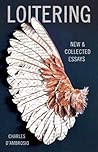
Loitering


Loitering: New & Collected EssaysLoitering: New & Collected Essays by Charles D'Ambrosio
My rating: 3 of 5 stars

I'm bumping this up to 3 stars, just because under all D'Ambrosio's pomp, there are nuggets of insight. I'm coming to find that a collection of essays can let you know more about an author than a memoir. These essays reveal a man who carries around a pretentious know-it-all under the guise of a Luddite who wears corduroy and is equally inept at camping. Mostly I think it is his vocabulary--which he more than critiques in others, so I feel is fair game. I constantly had to look up words, but when I did, they were "antiquated" or "uncommon", meaning--does he just read old 17th century books? Or maybe the trusty thesaurus was just too handy? He uses the conjunction "qua" in two of his essays. Seriously, who uses "qua"? If you can wade through the heavy-handed vocabulary, he does make some perceptive observations about history, grief, time, suicide, and literature. Also, the cover is very cool.

View all my reviews

in a sense we truly have history only insofar as it’s shared, and too much uniqueness really leads away from individuality to anonymity, the great sea of the forgotten.

I suppose it could also be said we’re known to the extent that we’re dull and orbital about our life, that what’s quotidian about us is more easily shared than the exuberances and passions that push us out of the predictable.

he’s mostly a misanthrope and a sentimentalist (how often those things go together!),

Randall Jarrell once wrote that even in the Golden Age people were always griping about how everything looked yellow; all our hopes elude us.

Just as shadows fall across lives, history falls across cultures. Things unravel never to reknit again

It’s always been a fond Western dream, after all the blood and pavement and franchising, to undo the whole sorry business and begin again.

“Relation is a mathematical notion which means one-to-one correspondence.”

Brick is relocated earth,

they wanted antiques without time.

Many of these gamblers were afraid of the past, haunted by it, and this tilted their faith in the direction of fate, a less ample, less accommodating idea.

As long as you could fall farther you distinguished yourself from the fallen.

anxiety has no object; in fact, it tries to become fear because fear has a definite object that can be faced with courage.

The absence of “real” money, flat money, is essentially the absence of a future. Not that the boys lack one—rather, possible futures never enter into their calculations; a cigarette equals pleasure, not the hoarding of deferred possibilities.

Is it size alone that accounts for the blurring of identity in a big family? The fact that you grow up crowded into the same bathroom, brushing your teeth in front of a mirror that has three or four other foamy white grins reflecting back at you—is that it?

suicide: that it’s always accompanied by some shift away from life’s normal priority, where it’s perfectly natural and expected that you’d defend yourself from danger, to a condition where you give up, defenseless, or even join in on the attack.

Is silence for a writer tantamount to suicide?

The belief in a single Truth leads to doubt about everything.

It is nonsense to say that God fills the gap; He doesn’t fill it, but on the contrary, He keeps it empty and so helps us to keep alive our former communion with each other, even at the cost of pain.

This seemed a crude and retrogressive project, since what really distinguishes us from apes is not the opposable thumb but the ability to hold in mind opposing ideas, a distinction we should probably try to preserve.

Whereas prison, well, what is it, really? A shortage of space compensated for by an excess of time.

This picture [of a man jumping/falling from the Twin Towers during 9/11] also brings us to a prison, one without a shortage of space; in fact, there’s a sudden, horrifying excess, a terrible liberation, with time in short supply.

If what distinguishes us from other members of the animal kingdom is speech, then literature—and poetry in particular, being the highest form of locution—is, to put it bluntly, the goal of our species.—Joseph Brodsky


A Spark of Light


A Spark of LightA Spark of Light by Jodi Picoult
My rating: 2 of 5 stars

I get that Picoult is trying to look at the issue of abortion from all different angles, and I think it is an important topic to consider from different lights, because it is a complicated issue. But I don't like the format of going backwards--it created a lot of repetition and some time line difficulties. Also, it was hard to remember how everything ended up for everybody by the end of the book. It diffused any sense of propulsion and I found it hard to motivate myself to keep reading. I also think there were too many characters. I get there are a lot of perspectives on this subject but the sheer number of characters kept us from really deep diving into any of them, and they all remained surface characters. Maybe that is why I didn't like any of these characters. I also felt that all anti-abortionists in this book were judgmental and absolute, while the pro-choice characters were willing to be understanding and tolerant. I think both sets of characteristics can be found in both sides. It's a good book to start a conversation and I thoroughly enjoyed the discussion in our book club, but as a book to just read, it didn't work for me.

View all my reviews

But there were those who believed if you do not name a thing, it ceases to exist, and so its title was amputated, like a war injury.

Were some betrayals kinder than others?

Did you have to be missed to exist?

A rush of calcium at the moment caused zinc to be released from the egg.  As the zinc burst out, it attached itself to small, fluorescent molecules: the spark that was picked up by camera microscopes.

Mischling


MischlingMischling by Affinity Konar
My rating: 4 of 5 stars

If a Danse Macabre could be written in words, this would be it. Telling the story of twin children and other genetic anomalies (dwarfism, albinism) that were sorted from concentration camps and used as experiments, this is far from an easy book to read. However, Konar uses such beautiful language and arresting images to portray these horrifics that at times you almost forget what she is describing. The tortures described are sometimes fantastic, and you can't help but wonder if they are based on fact--and then you realize that of course they are. The reunions and miracles that occur seem almost as fantastic, and easier to discount. But rather than discredit them, I chose to believe that if such atrocities could be real, so could these moments of hope. This story ends not with the liberation of Auschwitz, but goes on to describe the many months these refugees endured trying to find loved ones, and make their way to somewhere safe--a part that many stories leave out. Books of the holocaust are not easy to read, but I think we can learn from the strength of the sufferers and gain a determination to stop such cruelty wherever we find it.

View all my reviews

My letters were growing angry and their lack of signature was erasing me.  No one was counting bits of me in the laboratory anymore.  No one was totting up pieces of me.  I did not know if this was because the doctor told people not to or because the best part of me was gone.

Because I had it still, that wild hope; it was as steady as a spines and so pronounced I marveled. that the nurses and technicians did not take note of this development within me and mark it on their charts.

isn't evil a form of stupidity?

Those stars, they knew what suffering and renewal meant, they were forged from collapse and dust and fire.

the burden saved you, he finally said, until you had a moment to examine it, to feel, for once, its full weight.


Tuesday, March 2, 2021

dust

 Dust that fuzzes the edges

A great detritus fog

Made up of hair & skin & dandruff & powdered sweat & nubs from blue sweaters & sloughed mud from trainers worn when it rained & pollen from a mountain hike to Looking Glass Falls where ox-eyed daises rigidly rocked as if uprooting themselves to stalk after you--

Pieces of you attract and collect to your abandoned surfaces

As if it could proliferate thick enough to claim the matter as its own

As if you wanted to stay all along.


Those precocious motes dance

dizzy in the sun

like echos of your soul and 

trace the erratic trajectory of your 

travels in the shadows.


Let the dust nest in my brain

Let it choke my lungs

Let it mold its exoskeleton around me

Let all your pieces become my peace.