Thursday, August 25, 2022

A Legacy of Spies

A Legacy of SpiesA Legacy of Spies by John le Carré
My rating: 3 of 5 stars

The Spy Who Came in from the Cold is one of le Carré's masterpieces, but Smiley doesn't figure in too nicely. It seems he hung his joe out to dry and sacrificed an innocent girl in the process. This is an attempt to give the reader some background into how the mission was conceived and why with some not too subtle hints that George was not a fan, but needs must and all that. Narrated by the faithful Peter Gullies and full of texts of memos and reports, it rarely has any of the propulsion that drove SWCIFC. The descendants of the players on that fateful day want to know what really happened and why but the answers are mundane and depressing. In my opinion, this does not add to Smiley's history and actually detracts from SWCIFC.

View all my reviews

Wednesday, August 17, 2022

The Agony and the Ecstasy

The Agony and the EcstasyThe Agony and the Ecstasy by Irving Stone
My rating: 3 of 5 stars

This book will tell you pretty much everything you ever want to know about Michelangelo. It certainly led me to several of his works and helped me to understand the motivations and intentions behind them, leading me to a greater appreciation of his works. But there is also a lot of who's who--lists of people he ate with, artists he worked with--its all too much to keep track of . So much detail of his younger years, while the last decade of his life seems told in almost a run--as though Irving realized his novel was waaaay to long, even though Michaelangelo was quite prolific up until his death. Very informative, even inspirational at times, but still couldn't help feeling I was reading a 1,000 page book.

View all my reviews


Hitler's Furies: German Women in the Nazi Killing FieldsHitler's Furies: German Women in the Nazi Killing Fields by Wendy Lower
My rating: 4 of 5 stars

This is really more of a 3* book, but it raised so many questions and made me think so much, I can't give it less than 4. Lower gives the background of the type of women that were involved either as professionals or wives in the Nazi regime. Lower repeats often that women made up much more of the staff and personnel than we may think, because the men were tasked with military duties. Many of these women came from protected backgrounds, and were stunned when they were assigned to Ukraine and Poland to discover the extent of the "Jewish problem". Lower recounts how women were involved, how many reacted, what happened to them after the war, and tries to explain why women did what they did, and were very often not investigated after the war. I wish Lower would have looked a little deeper into some of the reasons and ramifications. She did not consider the idea of compartmentalization or the idea that women might have felt powerless to stop the violence because they were women. But she did do a good job of showing that hate and violence can be wrought by either sex.
I can't help but liken it to global warming. How many of us feel powerless or confused about what could make a difference and so rationalize our part in the using of fossil fuels, consumer waste, etc. We don't feel responsible for the heat wave that killed hundreds in India, the melting of polar ice caps that wipe out animal species, or the increase of insect-spread virus' because it doesn't get cold enough to kill them anymore while sitting in our air-conditioned cars eating fast-food from styrofoam containers. Should we feel more responsible? Why don't we? Yes, yes, I realize global warming is not the same as a targeted genocide--but is it? What other atrocities do we comply with simply because it is the "norm", it doesn't affect us directly, or we don't stop and think about the ramifications? Sometimes I think we feel powerless to save the world, so we simply shut our eyes to everything. (Or maybe that's just me).

View all my reviews

The Panopticon

The PanopticonThe Panopticon by Jenni Fagan
My rating: 4 of 5 stars

This novel is what I would call a modern Catcher in the Rye , simply because it has a rather unlikeable narrator who has found herself in a care home with the prospect of juvenile detention and prison in her likely future. She doesn't help herself very much--impulsive, prone to drug useage, and a bit of a short temper. But somehow she digs under your skin and in the end, you find yourself rooting for a girl whose determination and surprising compassion seems full of hope despite a system that seems only to watch and wait for these kids to self-implode.

View all my reviews

What if there was no experiment?  What if my life was so worthless it was of absolutely no importance to anyone?

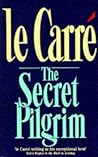
The Secret Pilgrim

The Secret PilgrimThe Secret Pilgrim by John le Carré
My rating: 4 of 5 stars

This book deviated quite a bit from le Carré's past Smiley novels. Told in the first person, this is actually a collection of anecdotes from one of Smiley's acolytes, Ned. Prompted by a speech Smiley gives to a group of new spies (taught by Ned), Ned reminisces about operations from the past, highlighting the human-ness of spies and the repercussions of that human-ness. I initially missed le Carrė's omniscient narrative and Smiley's perspective but the stories are interesting in and of themselves and while the whole book sort of ambles along (instead of building tension), it is still le Carré, and it is still a great spy read.

View all my reviews

Wednesday, August 3, 2022

As I Lay Dying

As I Lay DyingAs I Lay Dying by William Faulkner
My rating: 5 of 5 stars

I read this in high school and loved it. Rereading it at first I thought--why did I like this so much? But I think I had more patience in high school. After finishing it again, I went back and re-read certain chapters and yes, Faulkner takes a minute to get used to, but his ability to recreate the consciousness of all the different characters, add symbolism and forshadowing, tell a story in pieces and parts, was truly revolutionary and beautiful. I read somewhere it was like a Picasso painting--trying to show all the perspectives at once, which I thought was a lovely and apt way to describe it.

View all my reviews

Americanah


AmericanahAmericanah by Chimamanda Ngozi Adichie
My rating: 4 of 5 stars

Here's the thing: I've seen Chimamanda Ngoni Adichie give talks (on YouTube) and I love her. I didn't especially love the narrator of this book. I know they're obviously not the same but I was hoping to get more of the voice I admired from Adichie. This narrator is a bit too superior and condescending to garner a lot of my empathy. Anyway, it is definitely an interesting book. Its a book about Nigeria, but also about immigration. It's about the race issues in America (and England) and how recent immigrants are put in a unique position of having to navigate these issues without having shared in their history. (She tells a blurb about being expected to be offended by a watermelon comment, but being confused about why she should be offended). Its about returning to Nigeria and finding everything changed, especially her. It's a unique story and full of things to think about.

View all my reviews

How to Get Filthy Rich in Rising Asia

How to Get Filthy Rich in Rising AsiaHow to Get Filthy Rich in Rising Asia by Mohsin Hamid
My rating: 4 of 5 stars

A novel in the guise of a self-help book--could be gimmicky. A love story a la Love in the Time of Cholera--could be trite. But somehow the book transcends all that and enlightens us with business, government, and social aspects of "rising Asia".

View all my reviews


It can be borne endlessly, provided it is never acknowledged.

but like many desirable things, simply being well known does not make it easily achieved. 

(medical professionals).Their power to kill in the future by uttering mysterious words today robs her of her confidence and she, a customarily confident woman, resents this.  She longs to resist them but has no idea how to do so. 

But when you read a book, what you see are black squiggles on pulped wood or, increasingly, dark pixels on a pale screen.  To transform these icons into characters and events, you must imagine.  And when you imagine, you create.  It is in being read that a book becomes a book, and in each of a million different readings a book becomes one of a million different books, just as an egg becomes one of potentially a million different people when it's approached by a hard-swimming and frisky school of sperm.