Tuesday, June 21, 2022

Submergence


SubmergenceSubmergence by J.M. Ledgard
My rating: 2 of 5 stars

I think it was the structure more than anything that made this book less enjoyable. Each passage is only a paragraph or so long--most not longer than a page--and they toggle between characters, musings, and time-lines. While I thought the love story was intriguing, it never really expands or develops it enough that it is believable that it somehow sustains James through a kidnapping by terrorists. There are interesting tidbits and an intriguing premise about life and death being submergences of sorts. There are warnings about global warming, and insights into jihadist fighters but the author didn't make me care enough to sit down and draw all the connections.

View all my reviews

For him, it was a very dark and specific place.


What will happen next? The failure of Marx’s vision has created the need for another vision, not for a rejection of all visions. What remains today is the idea of responsibility (when the nineteenth-century idea of progress has died out), which works against the loneliness and indifference of an individual living in the belly of a whale.

For example, at the Helsinki University of Technology’s low temperature lab, in 2001, a Bose-Einstein condensate cooled near to the absolute zero of minus 273 ° Celsius stopped dead a beam of light traveling at 978 million kilometers per hour.

Because in many ways the ocean is more hostile than space. Space flight is a journey outward. You can see where you are going, which is why the crews in spaceships generally sit in swivel chairs facing a giant window or screen. Space is about weightlessness and speeds never before achieved by machines and that can scarcely be felt; the discharge of aerosol is enough to propel a vessel forward, a nudge of a pencil sets its course, and all the while the air inside of it presses against the void outside. Ocean flight is, by contrast, a journey inward, toward blindness. It is about weight, the stopping of the craft on thermal layers, the pressure of water pushing in, and the discomfiting realization that most of the planet you call your own is hostile to you. There will never be a Neil Armstrong moment in the ocean. There is nothing to light the way, no prospect, no horizon; even encased in a metal suit the human body is too liquescent to contemplate stepping out onto the deep sea floor.


The Enchanted April


The Enchanted AprilThe Enchanted April by Elizabeth von Arnim
My rating: 4 of 5 stars

This really was an enchanting book. 4 women with very different world-views. experiences, and expectations rent a villa on the Italian coast. Can a place truly change a person? Perhaps in Italy it can. Von Arnim does an excellent job of fleshing out our 4 characters--they are unexpected in some charming ways. What I suppose would really be interesting is to find out what happened in May....

View all my reviews

For years she had been able to be happy only by forgetting happiness.

The house was inherited. Death had furnished it for her.

Pilgrim's Bell


Pilgrim Bell: PoemsPilgrim Bell: Poems by Kaveh Akbar
My rating: 5 of 5 stars

Beautiful book of poetry. Akbar does things with punctuation that I've never seen before. By putting a period at the end of each line, it makes you read the poetry differently, creating new meanings by mentally putting the breaks in different places. I suppose it's what poets were after when they did away with punctuation in the first place. Some of his poetry is a little dense, but a few google searches helped unlock them and other poems are completely accessible. These are poems that invite meditation, and I enjoyed them immensely.

View all my reviews

You can hear them listening now for our listening.

“Mothers I Once Was” by Kaveh Akbar.  The title suggests these are iterations of being a mother, although, being a man, it begs the question whether he means himself or someone else.  Can a man be a mother? Is he explaining the ways and means he has been a mother or mother-like.  Another translation may mean that because he is borne of his mother, and was once inside her, made of her, these are the variations of his own mother.  


It is 14 lines, and has some internal rhymes, so it could possibly be called a sonnet.  Especially if it is in ode to his mother.  But it has neither a regular rhyming scheme or iambic pentameter.  Perhaps this has meaning as well?


Mother fingers in the mud.  Mother begging bowl.

Both of these sentences in the first line uses words that could be verbs or nouns.  Mother’s fingers are in the mud--possibly evoking the idea of creation--or she fingers (touch, feel, play) in the mud more action, but same idea.  The second sentence could have Mother begging for a bowl, but most likely that Mother is a begging bowl, a bowl that Buddist monks use to beg for their subsistence and shows their non-attachment to material goods.  In this one line we have the contrast of the powerfulness of Mother being a creator and yet not valued materially.


Mother lace weaver, drumming her web, babies

eating her whole. Bleachable mother.  Mother apron

smeared with flour.  Mother flower.  Mother Florida

This is in reference to Black Lace Weaver spider who drums her web once her children are hatched to show them where she is so they can then consume her and use her as food.  Of course, this depicts the Mother as one who sacrifices everything for her children.  Bleachable mother is along these same lines.  Sometimes all color seems to get sucked out of mother, or she’s able to made white (pure?).  Each line seems to be almost a train of thought, so the former seems more likely.  Bleachable (laundry) flows into bleached flour (cooking), which is smeared on her apron, another sign of creation, and perhaps another way that she is bleached.  It echos back to her fingering the dirt--she may be bleachable but she also gets dirty along the way.  Mother flower flows from flour--and mothers do indeed remind us of flowers.  (again maybe that is why she is fingering the dirt?)  Ironically,”Mother flower” is also used as a euphemism for cursing.  I don’t get the feeling he is using that here, though, even ironically. 


the wet bone.  The marble throne.  Mother sent back.

Mother Florida ties Mother flower, since Florida means flower is Spanish.  Tying wet bone to Florida is probably a news story about bones found in a Windover, Florida pond that is 7,000 plus years old, and they had to keep them wet to preserve them, if they dried out they would disintegrate.  It’s impossible to say whether he read the same article I did, but it started with a vignette of a small child being buried with its toys--one of the skeletons found in the pond.  Perhaps the hardest thing a Mother has to do is bury her child.  Mother flower linked with this story could also imply the death of the mother (perhaps that is the finger in the mud ?!)  Bone links to throne, which goes from a mass grave to royalty.  The marble throne could mean simply that or it could refer to the marble throne in Tehran, Iran where there is a famous marble throne whose supports are in the shape of women, men, faires, and demons.  Since there is no known woman that sat on that throne, it could be implying that kings are borne on the back of their wives and mothers.  It could also infer a marble throne discovered in the earth (link with the wet bone grave?) that has Aphrodite rising from the sea, or perhaps Persephone.  Either way, it is one of the oldest artifacts that has a woman engraved on it.  If he is referring to this throne, he could be contrasting life and death again.  

Mother sent back.  I’m not sure how this connects to throne.  But to me it seems evident that it is referring to Mothers sent back to their homeland (deportation) without their children, which happened and was in the news a lot the year this is written.  I can’t imagine being separated from a child, not able to help them or know what happened to them.


Mother bent back curling like script.  Mother, depended

Bent back/sent back rhyme and connect itself.  Here you can picture a woman bent over, always bent over with womanly work cleaning, baking, gardening, her back bent like a letter.  As she gets older it gets harder to straighten oneself out, much like paper curls on itself after it has been written on.  Mother, depended connects with bent back, as she becomes more dependant.  Here the punctuation is interesting--it could mean that mother depended  on the light or it could mean that whether or not Mother was mother depended on the way you saw her--the light.


on light.  Mother? Depends on the night.

Now there is a question mark after mother.  Depends on the night--again it could mean that Mother depends on the night--to give her rest, maybe.  Or if it means sometimes she is a mother and sometimes she isn’t because maybe some nights she becomes another role. 


Mother for whom the whole sky.

This is a stanza by itself.  It seems to be a fragmented sentence, but it is probably my favorite.  The Mother is the whole world.  When she is happy the sky is blue, when she is angry is seems as if the whole sky would be cloudy.  She is the thing you can count on, she is always there.


Mother hiding in the curtains, humming too loud.

Is she an insect again?  Something that can be heard but not seen?  Does she murmur too much?  She was just the sky, and now she is an insect hidden but annoyingly humming.


Maggot mother at the shroud. Mother thought it possible.

So now Mother is a worm on someone dead.  Feasting on someone already dead--could mean a renewal of life or perhaps it is symbolism of rot and decay--she causes rot and decay? Now she isn’t loud, but she is still something not wanted, yet something that insists on being there.  Mother thought “it” possible.  What is it?  Does it have something to do with death.  Does it have to do with persistence the other two sentences point at?  And is it a good thing or a bad thing?  Does her persistence annoy or inspire?


Mother was wrong.  Mothersong.  Our Lady Mother of Wet Beds

Again this is rather ambiguous.  It could mean that what she thought was possible actually isn’t or it could just point out that sometimes Mothers are wrong.  Wrong flows into song.  Mothersong seems to be a type of song in the Arabic world that honors mothers.  Their lyrics honor and show gratitude for Mothers.  So perhaps mothers are annoying and wrong, but they are praised and thanked anyway.  This honor of course flows into the prayer for the Virgin Mary that is altered quite a bit--Lady Mother of Wet Beds--well, again her work is not glamorous..


And Aggressive Disgrace.  Mother persimmon, name sounds

Once again, this shows a bit of resentment toward the Mother, who obviously does not approve of the child’s action and is concerned with honor and public standing.  Persimmons are bitter and so again, shows maybe the human side of motherhood.


the way she tastes.  Mother with all creation fattening,

Not sure whether this means that Mother gets fat as she gets older or if she fattens all creation--my experience with mothers might be the latter.


Mother who held on while it was happening.

Again, don’t know what “It” is, but it seems to end on a high note.  Whatever is happening, Mother is there.  


This poem surely runs the gamet of all the feelings we feel towards our mother.  Reverence, awe, gratitude, compassion, resentment, bitterness, annoyance, but overall by seeing Mother as a person with all these angles, I think it shows a love for Mothers that is complete.


Monday, June 13, 2022

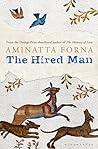
The Hired Man


The Hired ManThe Hired Man by Aminatta Forna
My rating: 5 of 5 stars

Look at charming hunting scene on the cover. Read the first few chapters of a hired man in Croatia helping a woman and her children restore a house in a small village by the sea. Then get hit with a growing intensity as a mystery unfolds and you discover the hidden lives of the charming villagers. The tension grows like a bowstring being pulled so slowly you worry it might break before its finally released into the bullseye. Very satisfying.

View all my reviews

Time and rats had got to most of the stuff.

In the blue hour things happen.

I did it to spite Kresimir, he retained a grip on my imagination and in that way I'd become his creation.

The next day I told my father he was wrong: the past is never passed.

The Light of Days


The Light of Days: The Untold Story of Women Resistance Fighters in Hitler's GhettosThe Light of Days: The Untold Story of Women Resistance Fighters in Hitler's Ghettos by Judy Batalion
My rating: 5 of 5 stars

It seems like you can burn out on WWII narratives. Yet this nonfiction account of the resistance fighters was fresh and strangely inspiring. Despite being overwhelmingly outnumbered, outmanned, and no hope of winning (they quite regularly forgot to plan what to do after a campaign because they assumed they would all be dead), these Jews fought back for dignity and rightness sake. Many of these fighters were women and their strength and courage was amazing. I can't say enough of how strong these (mostly young) women were. There are a lot of names flying around and at first I struggled to keep it all straight, but soon the story carried me away and even if I couldn't connect who was who all the time, each story was still riveting.

View all my reviews

"Responsibility for others brings you back to your feet," Zivia wrote, "despite everything"

The Dictionary of Lost Words


The Dictionary of Lost WordsThe Dictionary of Lost Words by Pip Williams
My rating: 3 of 5 stars

Like 3.5 stars. Esme is the daughter of a lexicographer working on the Oxford English Dictionary. The OED is the bible of the literati, and the compilation of it was no small task. But what Esme discovers is that because it is overseen by educated white men, words of the poor, women, and ignorant were left out or definitions not complete. Do the words we put in dictionaries or leave out matter? Should slang, curse words, or words used among certain groups be left out? How and when do we determine that a word is part of our lexicon? Not only does this book bring up these interesting questions, but it also chronicles the life of Esme, who is trying to find her place as a contributing woman at the turn of the last century. It reads a bit as though you were reading the OED--some parts are long and boring, some parts are incredibly interesting, but overall it helps you learn something new.

View all my reviews

Some words' histories stretched so far back that our modern understanding of them was nothing more than an echo of the original, a distortion.  I used to think it was the other way round, that the misshapen. words of the past were clumsy drafts of what they would become, that the words formed on our tongues, in our time, were true and complete.  But I was realizing that in fact, everything that comes after that firs utterance is a corruption.

Bondmaid.  If I hadn't found it and explained what it meant would Lizzie see herself differently?

Friday, June 10, 2022

Revenge

RevengeRevenge by Yōko Ogawa
My rating: 4 of 5 stars

After the magic of the The Memory Police I dived into this collection of interwoven short stories. Each story dovetails into the next and there are "easter eggs" hidden among them. You almost have to read them all in one sitting so you don't miss any of them. I have to admit that I didn't find strong revenge in these stories, rather some rather macabre characters and uncanny circumstances. Great fun!

View all my reviews

You trust the bag, and it, in return, trusts you.  To me, a bag is patience; a bag is profound discretion.