Friday, December 12, 2025

Skipping Christmas

Skipping ChristmasSkipping Christmas by John Grisham
My rating: 2 of 5 stars

Perhaps this is a good book to read to help evaluate why we run around at Christmas thinking we have to do everything and spend money we don't have, and how mostly its to appease people and keep up appearances. But also how traditions are what create memories and bring people together. The community spirit in the end makes the book a good read, but most of it feels like a drawn out short story. Also surprised by the casual racism.

View all my reviews

Like A Bird

Like a BirdLike a Bird by Fariha Róisín
My rating: 1 of 5 stars

DNF. I give this one star because it had so many elements that should have been made a good novel--the exploration of a mixed-race family where the siblings carry dominant traits from alternate parents and how that shapes their world-view, their family dynamics, and their self-esteem; the protagonist goes through trauma and is helped through it by being able to see dead relatives; her parents throw her out of the house because they believe she is promiscuous when she was really raped and she has to build a life on her own. Any of these would make a good premise to read, but unfortunately the actual execution was excruciating to read. So many inconsistencies, improbable actions and situations. Also, in my opinion the writing read flat and the dialogue stilted. Not sure how this ended up on Best Of lists....

View all my reviews

My Monticello


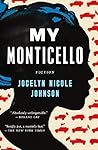
My MonticelloMy Monticello by Jocelyn Nicole Johnson
My rating: 4 of 5 stars

A nice collection of short stories playing with voice and perspective--engaging and enlightening, examining ideas of race and family. The novella at the end "My Monticello" was especially memorable--I could see it being a novel or movie.

View all my reviews

Thursday, December 4, 2025

The Book of V.


The Book of V.The Book of V. by Anna Solomon
My rating: 5 of 5 stars

Growing up, the story of Esther was a favorite because it was one of the few stories in the Bible where the hero is young woman. The focus was always on her bravery and saving her people when no one else could. We knew she was brave because she approached the king without his requesting her, and this might have led to her death. But we know this because there was a former queen, Vashti, who was (assumed) killed when shed didn't come when the king requested her. It's a simple story but the Bible leaves a lot of space in the plot, and there are a lot of thoughts as to why and how the king demanded Vashti's audience and why she turned him down; how Esther was caught the eye of the king to become his second wife; and the character of the king himself. Between Purim pageants and scholarly theories, Esther's story contains multitudes. Solomon adds to this by creating a whole new allegory of women's power. Using three different women in three time periods Solomon explores both the power and vulnerability of women --they both use sex as a weapon, and exploited in return; they grapple with ability to create and how that creation can be useful, powerful, or demeaned or even used against them; how we often let men define our power and try to please them instead of defining ourselves; and how if we are lucky we can build a community of women around us to support us and our creativity. I thought it was particularly interesting that Solomon focuses on domestic arts and knowledge as a means of creation and expression and found truth in the idea that these acts which can be dismissed as women's work (such as sewing, cooking, etc.) are really great expressions of love, passion, tradition and identity. Sex does play a dominant role in this book, but used in a way to illustrate the way both genders use it as a power over the other. I enjoyed all the timelines in this book and thought the writing was fabulous. I loved how the deliberate parallels in the stories evoked themes and ideas that were explored from so many angles.

View all my reviews

My heart isn't hard, Lily thinks.  It's only stretched, and a little faded--often there is only enough space for her own kids' shit and string beans.

Better than becoming a beast would have been to become a man.

their desire for the dresses was not about having something but being it. 

Even if a shred of magic were buried somewhere in him, he would not be able to access it; to access it, you had to be receptive; to be receptive you had to be capable of admitting all you did not know.

anyone would think first to fly, above the earth, and, when that didn't work, to go through.


Having and Being Had

Having and Being HadHaving and Being Had by Eula Biss
My rating: 4 of 5 stars

This felt like having a conversation with a friend. Bliss researches and then asks questions, she talks to people and then muses over what they told her. The chapters are short, each sort of dovetails into the other and the content, while mostly about capitalism, art, value, and money meanders as your thoughts or a good conversation would. She doesn't give any pat answers or come to any conclusions (except maybe what she values in her personal life) but it raises enough food for thought to be interesting. The only thing I didn't like was her revelation to write this book so that she could afford to write other books, which colored the whole project for me into more of a pretense than a true examination of the subject.

View all my reviews

its earliest usage, consumption always implied destruction.

What is destroyed when we think of ourselves as consumers, Graeber suggests, is the possibility that we might be doing something productive outside of work.

money is not to blame for this, Piff suggests. What’s to blame is the comfort that a higher class status affords—the independence, the insularity, the security, the illusion of not needing other people.

They don’t boast about their wealth, but about their thrift. They talk about looking for good deals and driving old cars.

Credit is a form of optimism, Yuval Noah Harari suggests. It depends on the belief that the future will be more prosperous than the present.

Credit creates the illusion of equality, in that we can all buy the same things on credit, but we can’t all pay the debt back.

The social cost of some things is their very cheapness.

Work, if we are fortunate, is rewarded with money, but the reward for labor is transformation.

Bureaucracies have a way of making work out of labor and—

Toil is the word Galbraith uses for work that is fatiguing and monotonous and a source of no particular pleasure.

Part of what makes a job good, they understood, is the sense that what you do matters.

Perhaps we should all keep a memento of the Titanic, just to remind ourselves of how safe disaster feels.

Art unmakes the world made by work.

“We are all communists with our closest friends,” David Graeber writes, “and feudal lords when dealing with small children.” We move between different systems of moral accounting, he writes, but all social systems, including capitalism, rest on a bedrock of everyday communism. By everyday communism he means the principle: “From each according to their abilities, to each according to their needs.” An entire economy couldn’t be organized this way, Graeber argues, but many of our daily interactions already are. This is how we exchange information, for instance, in conversation.

Ketman, my brother says, is the word Miłosz used for living undercover, in secret opposition to the regime that wrote his paycheck. He borrowed the concept from Islamic theology, which allowed true believers to conceal their faith when surrounded by unbelievers. For Miłosz, ketman was something like the art of passing. “To say something is white when one thinks it black,” he wrote, “to smile inwardly when one is outwardly solemn, to hate when one manifests love, to know when one pretends not to know, and thus to play one’s adversary for a fool (even as he is playing you for one).” That is the game of ketman.

“It is a way of living with contradiction,” Jacob Mikanowski writes. “It allows those adept at it to create private sanctuaries of the mind, untouched by compromise, even as compromise floods the rest of their lives.”

Precarious was Merriam-Webster’s word of the day recently. This is how I learned that “depending on the will or pleasure of another”
it comes from the Latin for prayer.

“Who enters the precariat?” By everybody, he means potentially anybody.

Some people choose their precarity—evidence that precarity is not just a condition of our time, but a response to

Their very existence is unsettling, suggesting, as it does, that there might be something worth more than security.

John noticed that affluence is the French word for the tributaries of a river.

The people here believe that if artists are successful then their success should produce all the money they need. And if they aren’t successful then they don’t deserve money.

Cars don’t always signal their intentions. And cars aren’t always nice to each other, though they usually show each other some respect in deference to the damage they can do to each other. They are like important men in conversation with other important men. Bicycles are sometimes kindly accommodated by cars, often ignored, occasionally respected, sometimes nervously followed, and frequently not even seen. In this sense, riding in traffic is not unlike being a woman among men.

On a bicycle, I’m alert, aware of everything. It’s exhilarating, the narrow margin, the exposure to injury, the steadying force of the spinning wheels. And then, for the sake of comfort or convenience, I get into a car. The sound of the street is dulled. I sit back and turn on the radio. I become distracted. Speed is easy, unearned, and bicycles are now an annoyance. I forget who I was just moments ago.

Pleasure is not necessarily harmful, he writes. But it “outrages that part of us which is concerned with growth.”
A Long Petal of the SeaA Long Petal of the Sea by Isabel Allende
My rating: 4 of 5 stars

Such an interesting history of immigrants from Spain to Chile, adjacent to the life of Pablo Neruda, whose poems are scattered throughout the book. It's a history of a particular group of people, but also the history of Chile. It's also a beautiful love story between two people thrown together by circumstance but then to grow to realize how deep and sweet love grows in the trials and joys of life. If it was missing a little magic, it was still a satisfying, enlightening read.

View all my reviews

Tuesday, November 18, 2025


Group: How One Therapist and a Circle of Strangers Saved My LifeGroup: How One Therapist and a Circle of Strangers Saved My Life by Christie Tate
My rating: 1 of 5 stars

DNF. Memoirs are hard to rate, since they are simply a person's experiences, and how can you rate that? However, I have issues with the fact that this was written as a testament to the power of group therapy. Tate's life does seem to gradually trend upwards (I quit at 60% but read the "10 years later"), but at 60% she still hadn't reflected on WHY or HOW group therapy was helping her. Her reverence for her therapist was disturbing to me--she tended to base her actions on what she thought her therapist would say or do. And also, I don't think her recounting all the debasing and humiliating things that she did or had happen to her is necessarily brave or enlightening; especially since she didn't seem to give the same emphasis to her improvements or accomplishments. I'm glad she found something she thought helped her, but neither group therapy nor this book was for me.

View all my reviews