Tuesday, February 17, 2015

The Invention of Wings

The Invention of WingsThe Invention of Wings by Sue Monk Kidd
My rating: 5 of 5 stars

This book exceeded my expectations.  The characters were well-drawn, the plot was perfectly paced, deep questions of identity, freedom, and ambition were explored...even the writing was beautiful.  I was not impressed with The Secret Life of Bees ... I thought the characters were too cliche, but I was pleasantly surprised by how much I enjoyed this novel.  Perhaps because Sarah was based on an actual person...sometimes life is better than fiction, and doesn't  fall so easily into cliches.  I could have done without Oprahs editorial thoughts in this edition. I read a few of them, then skipped the rest.


View all my reviews

Monday, February 16, 2015

Musicophilia

Musicophilia: Tales of Music and the BrainMusicophilia: Tales of Music and the Brain by Oliver Sacks
My rating: 2 of 5 stars

To be fair, a lot of how much I enjoy a book depends on my expectations going in.  I wanted to understand some of the mysteries behind music...why do some people like rock and others country? for instance...or does music actually help an athlete run longer or faster?  Exactly how does music work to get us to feel patriotic, or happy, or sad?  Why is music in the minor key perceived as dark and the  major key happy?  Why I thought these kinds of questions would be answered in this book I have no idea.  But I was disappointed.  It is true that some of these questions are answered, kind of, but the organization of the book makes it hard to get what I was looking for.  It seemed to me that Sacks merely searched "music" in his computer files of patients, then grouped them together according to diagnosis.  In fact, in several instances, he tells us what he prescribed to help the patient.  Fine if you are a doctor or fellow-sufferer, but not relevant to most of us. In some cases, there was no explanation or resolution, just a list of observations.   Since I was able to highlight about 10 min. worth of information, it was not a total loss, but not what I was looking for.


View all my reviews

Orfeo

OrfeoOrfeo by Richard Powers
My rating: 5 of 5 stars

This was not the book I thought it was.  Being a biology/scifi   afficianado I thought this would focus more on a guy in a chem lab and then a fast paced man hunt.  It was not that.  It is a story of music.  And artistry.  What do you sacrifice for arts sake?  Is it worth it?  What is art? Is it what is enjoyed by most or is it the purely original? Can anything be original anymore?  These questions have been  explored before, but I found this books reiteration wholly original.  Powers has created a book full of big ideas, large words, and layers of poetry and crammed them into the small life of a composer seeking that elusive song.  I actually thought I was plowing through it, when suddenly I realized this one of the most amazing books I have ever read.
1) it changed the way I listen to music.  Being a word person who likes to dance, music has always appealed to me in one of two ways: either as another dimension to the poetry of the words, or it had a good enough beat to dance to.  I listened to classical music like someone taking their vitamins, not necessarily out of enjoyment but because it was good for you.  And I hardly tolerated the shoe-gazer music my husband likes.  But Powers descriptions of several pieces of 20th century composers were transcendent.  After reading his descriptions, I looked them up on you tube and sat with my eyes closed on the couch and felt like I was seeing for the first time.  He made me love all of these beautiful songs by unlocking their mysteries through his words (except Barstow...even I have my limits).
2) music is life and death. The songs he picks to highlight are songs that transcend death, save people from death, or are powerful enough that they could have caused death.  Now here is Peter Els trying to create an eternal legacy that others simply fear is a song of death.
3) I loved the way Powers used musical descriptors to describe everyday scenes.  "He returned, de capo..." Sure I had to look up what de capo meant, but I loved the blending of the two worlds.  Using everyday imagery to describe the songs, and musical ones to describe life.
4) go back and read Els tweets scattered throughout the book after you have finished.  Reading them at one go is illuminating.
All right, I am done.  And I haven't even touched on the relationships Els accumulates, the questions he asks about freedom, art, and legacy or the observance of our diminishing patience as a people, the over-saturation of information and music available to us, the busyness of our existence that cause us to not notice or appreciate the natural music all around us.  But this is an amazing book.  I would be interested to see what my musical friends think.


View all my reviews

,

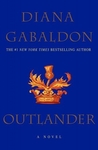
Outlander

Outlander (Outlander, #1)Outlander by Diana Gabaldon
My rating: 4 of 5 stars

I was pleasantly surprised by Gabaldon's Outlander.  I realized half -way through that I had expected a cheesy novel with bad writing and poor character development.  After all, most popular novels are hardly good literature ( read: Twighlight, Dan Brown, etc.).  But I was charmed by this fish out of water tale.  I'll admit Clare can be tiresome, and there could be some tighter editing (especially in the middle...enough about tales of corporeal punishment as a lad already!), and a torture scene gets really ugly and then too thoroughly rehashed, but I'll admit the plot was well thought out, I cared enough about the characters that it brought me to tears at one point, and I fully intend on finding out what happens next.


View all my reviews

Thursday, February 12, 2015

To Know

I thought my body would recognize
     my blood was gone--

I would feel the silver of mercury
     coat my bones,
     turn my heart to ash,
     choke my brain with thistles,
Then I would know;
I could prepare.

Before the phone rang
     the room would turn black,
     a thousand icy spiders would
          crawl down my back;
And I would know--
Before I would know.

But when the call came,
I was sweeping cobwebs from beneath the sofa.
How could I know
     (when I was sweating and panting)
That my breath was gone--
That my blood was gone--
How did I not know?

But I knew.
I knew when I first tasted the Fruit--
     it exploded inside me
     like so many sparklers
     feeling their way down to fingers and toes
     until I was filled up with
           lavender,
           honey,
           butterflies.
Yet even as I felt the moisture
     dribble down my chin,
I spied the Pit at the heart of the amber flesh--
          red,
           dry,
          a hard knot of darkness--
And I felt the metallic wetness
     like blood at the back of my throat
     when I swallowed it.
And I knew.

It sank deep in my stomach,
     It ate at my brain.
I tried to blanket It,
     like an oyster turning sand to pearl.
It became familiar in my side
And most times I could forget
That I knew.

But the Pit would work itself free --
     with lonely nights,
     cold dinner plates,
     newscasts on the radio.
When at last he re-entered,
     my face flushed,
     lying in the flesh of his arm,
     hearing the dampness of blood,
I would swallow the Pit back down,
Trying to ignore
What I knew.

Now that I have stopped bleeding,
     my mouth parched,
Now that the lights are extinguished,
The Pit rattles around in my cage,
     rises up in my throat,
     nibbles at my sockets,
Consuming me
     until everything is dark;
     everything tastes like soot.
Now I know.
(Of course I knew.)

They say the Pit is really a Seed--
If you plant It, It will stretch to the Heveans
     and bear Seedless Fruit.
But that means I must bury the Pit,
And that is all I have left.
That is all I know.

Thursday, February 5, 2015

The Big Smoke

The Big SmokeThe Big Smoke by Adrian Matejka
My rating: 5 of 5 stars

This book excited me more than any other to teach high school English. Just imagine the different ways you could go with an accessible book of poetry about the first black heavy weight champion who went from rags to riches, has gold teeth, reads Shakespeare and goes to the opera, likes fast cars, and has a turbulent relationship with his wife, who is white.
(You could have the kids do research on any of those subjects: race relations, individual fights, who his girlfriends were, the opera, boxing, Mann Act, abuse, suicide...you could have them write biographies of their own in verse, or show pictures of Bellows, or find songs about boxing...open it up to all sorts of interpretations, have them use their talents to do the same. )
 Matejka does an excellent job of capturing the voices of all the different players. By the time I was through with this book, I had a deep sense of who Jack Johnson was, not just what he did. A little more research on the Internet helped me to appreciate the poetry even more. I especially liked "Cannabilism" about Galveston after the Great Storm, "Equality"...a car race that paralleled his fight with Ketchel in the ring "Out of the Bath"...which is an intimate picture of his relationship with Etta; and of course "Fight of the Century"...a round for round description of his fight against the "Great White Hope", Jim Jeffries, and echoes the rhythm of the fight.

View all my reviews

Red Azalea

Red AzaleaRed Azalea by Anchee Min
My rating: 4 of 5 stars

I got this book hoping to learn more about the Cultural Revolution. And I did, though not in the way I anticipated. Instead of focusing on the travisties of the Cultural Revolution, Min simply tells the story of her life while living through it. I was distracted at first by the focus she places on her love affairs...I wanted to know more about life at the Farm. But after sitting with it for awhile, I came to appreciate this intimate tale of what it was like to live through the Cultural Revolution, not just facts about it. My journals are filled with who I loved more so than what I ate or what was happening in the world. Love is what drives us, even if, especially if the government attempts to take away family, pets, and your sense of self. Those who looked for love from their leaders turned into manipulative, petty, bitter fools. Finding love wherever she could kept Min from dispair we can only imagine where a government tries to control every aspect of its people's lives. The language is very lyrical...very beautiful, yet at times I was confused about what was actually happening, and what was imagery.

View all my reviews